


In my experience, there are major gaps between what professionals provide versus what DIY investors prioritize. We aim to help close that gap.
By doing so, we hope to allow self-directed types to borrow from my experience, embrace the analytics capability I have access to and the “intellectual property” I’ve developed over the decades.
So they can decide for themselves how to use it.
Rob Isbitts - Creator, ETFYourself.com and the ROAR Score investing factor.
Investing in the 2020s: It’s just different now.
I’ve been a professional investor long enough to remember when very few people cared to learn about investing. They more likely worked for big companies, and earned a pension, instead of handling a lot their savings themselves.
I started building portfolios in my prior life as an investment advisor and fund manager in the early 1990s. After several years designing systems for portfolio managers, I became one in 1993. Ironically, the same year the first ETF (SPY) debuted.
Fast-forward to now, and “everyone” is into “investing.” However, to my great disappointment as an investing industry lifer, who learned to chart stocks as a teenagers (with high tech tools like a pencil and graph paper!), there’s a lot of wasted time today. When it comes to helping self-directed investor learn to invest FOR THEMSELVES, much of my industry has not taken what I’d call the high road.
Stock picks, fast-talking Instagram personalities turned investing experts, and urgency about everything dominate our attention. I get it, “sex” sells and in the investing world, what’s sexier than investing a little to make a lot? Or, following a time-tested approach like dividend investing, or just buying and holding an S&P 500 index fund? I suppose people feel safer when they invest in something popular. Except for one thing:
Much of it is a false promise of success. It doesn’t last. Why? Lack of process, too much greed and speculation, and lack of recognition of how markets now operate.
We’ve had nearly 2 decades of “easy money” fiscal policies around the globe. That has created an environment where consolidation of effort is not only less stressful and less time-consuming, but likely produces better long-term results.
How do you get started? Here’s my take.
I’ll cover the steps to build a portfolio, right after I drive home some key pre-requisites. To see what I see, and follow my lead in building your own portfolio, it helps if you agree to do the following. Commit to them from the start.
Make risk management THE priority. So much investment discussion is barely distinguishable from gambling. “What to buy now” and “don’t miss this big stock pick.” That’s no good without context. What I’m talking about here is the concept of risk management. That any security can go up at any time, but that the degree of risk attached to pursuing that return varies by security, and by time. Sounds basic, right? But so often, we let marketing noise get in the way.
Learn to use ETFs as the flexible vehicle they are. These modern tools are often overused or underused. And ETF is a just a wrapper around a set of assets with a pre-determined purpose: to track a segment of the investment markets.
Build portfolios based on the realities of the 2020s, not the 1990s. I’ve invested through both. The two eras have little in common. It has to to with the emergence of algorithmic trading, the explosion of interest in options and leverage, and indexing. ETFs have been part of that.
Play offense and defense…at the same time. What does that mean? I’m always invested to participate in a rising markets. However, I’m also hedged. Always. Sometimes, the “defense” part of the portfolio can overcome the weakness of the offense side in rough markets. If you buy into that concept, you have a fighting chance to make money in ANY market. Something most investors can’t do.
Be humble and curious throughout the process. We all have shorter attention spans than when we were kids. And unfortunately, we now live in a most arrogant and skeptical world. I ask that you approach building a portfolio like its a business. Your business. And in business, the first goal is to stay in business. And to treat the journey as critical to reaching the destination. You don’t need to become a market and ETF expert. You just need to avoid being overconfident. This picture should help.
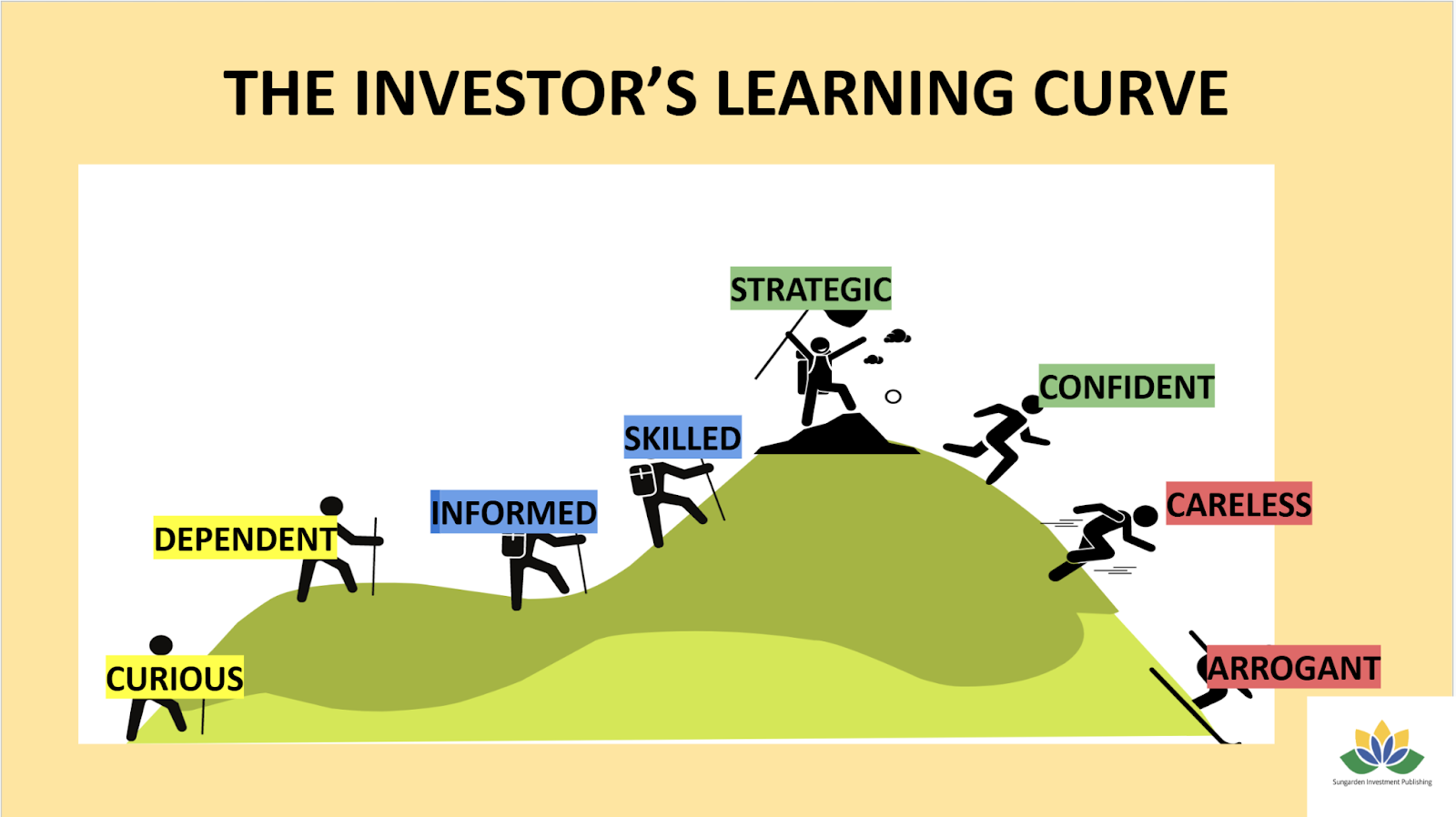
Building an ETF portfolio. Simply and effectively.
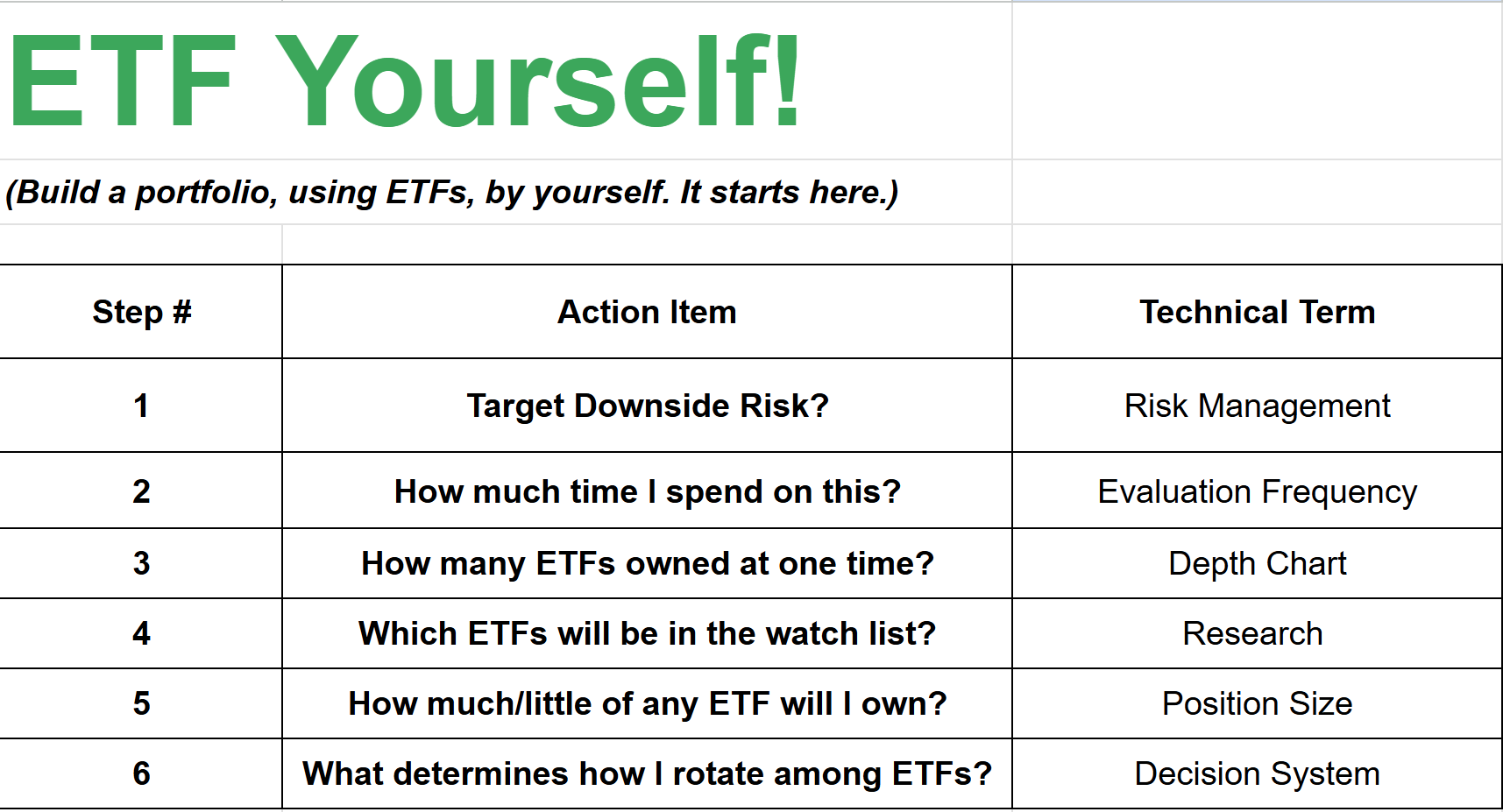
That table above provides a snapshot view of 6 key decisions that should be made by a DIY investor before they start putting their hard-earned money into a portfolio they build themselves. Today’s world is so transactional but here, it should be strategic. Otherwise, we set ourselves up for a case of “I didn’t realize THAT could happen.”
1. Risk Management
This is across the whole portfolio. It does not matter what any single holding does, if you manage the portfolio as a unit. In the same way a star player can’t carry the whole team forever.
My personal limit to what I’m willing to lose in my main portfolio before serious consideration is 10% from top to bottom. When you consider that the S&P 500 drops 20% from time to time, and 50-60% in bear markets, that tells you I’m not willing to play that game. I do not believe that big losses are OK because “it always comes back.” Because historically, that’s just not true. Its the “recency effect” because of the times we live in.
In fact, I’ll have some serious discussions (with myself) if I am down 5% from peak to trough. But that doesn’t mean you can’t have a looser downside limit. 10%, 15%, even 20% is typical across the investor spectrum. Frankly, if its more than 20%, that’s not consistent with what we coach here. Still, anyone can take our work and modify it to be more or less aggressive. That’s the idea. We provide the research and structure, so you can do you!
2. Evaluation Frequency (a.k.a. time commitment)
Everyone who wants to invest on their own has to find time to do it consistently. I have some trading portfolios that I look at closely every single market day. However, for the type of investing we’re discussing here, a weekly regimen seems just fine.
The key is maintaining “neutral” and high/low ranges around the size of each ETF position. That’s part of step 6 below.
That said, when markets get very volatile it can create some opportunity. Those may also be when major losses can be avoided through proactive moves. As such, I suggest that DIY investors develop their own, personalized set of rules around what prompts an unexpected portfolio review day.
That said, my ROAR Score approach takes a lot of the guesswork out of that. And at times of market calamity, I am more active than usual in communicating with subscribers. The MANAGE RISK tab helps you explore that.
3. How many ETFs to own?
Just a pair of them, one representing the stock market, the other T-bills (cash), is enough for some investors. In fact, as time goes on, I think more folks will embrace the simplicity of that paradigm.
But while rotating among 2, 3, or 4 ETFs has its advantages as to efficiency of time and effort, it leaves a lot of opportunity on the table. So here, I’ll focus on my go-to approach for larger ETF portfolios. How large? $100,000 and up, but could be as low as $50,000.
Recently, I challenged myself to reduce the more than 4,000 US-traded ETFs to the smallest number I thought could be managed in a portfolio, alongside each other. The number I ended up with? 10. The key is that by cutting out more than 99.7% of the entire ETF universe, did I still feel I could avail myself to the vast majority of opportunities across the broad markets. My answer? YES.
Keep in mind that while this works for me, the PROCESS is the key. So you can customize it for yourself. Part of our service is to discuss and debate YOUR ideas on things like this, using me as a resource, and sounding board.
See our INVEST tab for deeper dives on the rationale for portfolios containing anywhere from 2 to 10 ETFs. We talk stocks there, too.
4. Position Size
Even in a portfolio with a small number of ETFs, it helps to install some “guardrails” around the investment process. A key aspect of that is determining and assigning the maximum and minimum portions of the total investment (in % terms) I am willing to own at any point in time. And, what I’d consider a “neutral” or average weighting over time. This elevates investing from a set of transactional decisions to a true investment philosophy, process and strategy.
Low (Minimum) weights
I try to avoid “binary” decisions. In other words, I’ve found that over-simplifying to questions like “am I in or out” of an ETF is a bigger performance detractor than having at least a sliver of an allocation at all times.
Maximum weights
The maximum weights serve as a risk management device. They keep me from getting too excited about any one position.
Neutral weights
This is really the most important of the 3 weight columns. Because while the other 2 deal with the extremes, “neutral” weights are essentially saying to myself “if I could only make changes every several years, what would my long-term position be. As such, it could represent an allocation example for those who want to consider “set and forget” for a portion of their portfolio.
5. Decision System (rotating among positions): ROAR
Position rotation is one of THE keys to effective risk management. Frankly, having a sense of when to get out of the way of a proverbial market freight train coming at us is what allows us to sleep at night. But “a sense” can’t simply be what we feel like. There has to be something consistent, and regimented.
In other words, it is great to have a set of offense and defense ETFs we own. And it is even better to have position size ranges and a neutral rate around each one. But PORTFOLIO MANAGEMENT is more than just that. It is creating for yourself a mechanism that governs when changes are made, and in what magnitude.
For me, that’s the ROAR Score. Because I built it based on 30+ years of staring at technical charts and making investment decisions from them. So it works for me.
And when you are part of our community, you can borrow ROAR and use it as much or as little as you like. And how you like. Plus, you can ask me questions about using it, and applying it to specific securities. That’s a big part of our live sessions. And I’m here to coach our subscribers.
ROAR is covered in a separate post, so I’ll simply summarize it here.
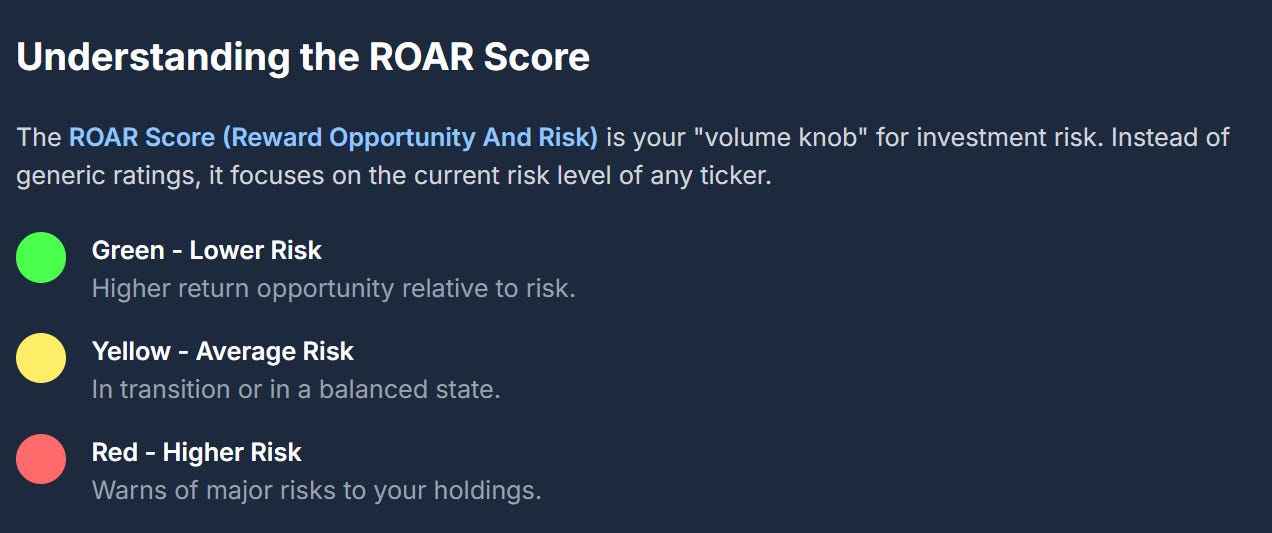
Stands for Return Opportunity And Risk (ROAR)
Looks at any investment at any time, with the goal of answering the question:
“I know I can make money if this goes up in price…but how much risk of major loss am I taking to pursue that return?).
I’ve simplified ROAR into a set of 3 broad risk conditions an ETF or stock can exhibit at any point in time. Tracking how those fluctuate is at the center of my research. And what we deliver through our analytics site, ROAR.PiTrade.com.

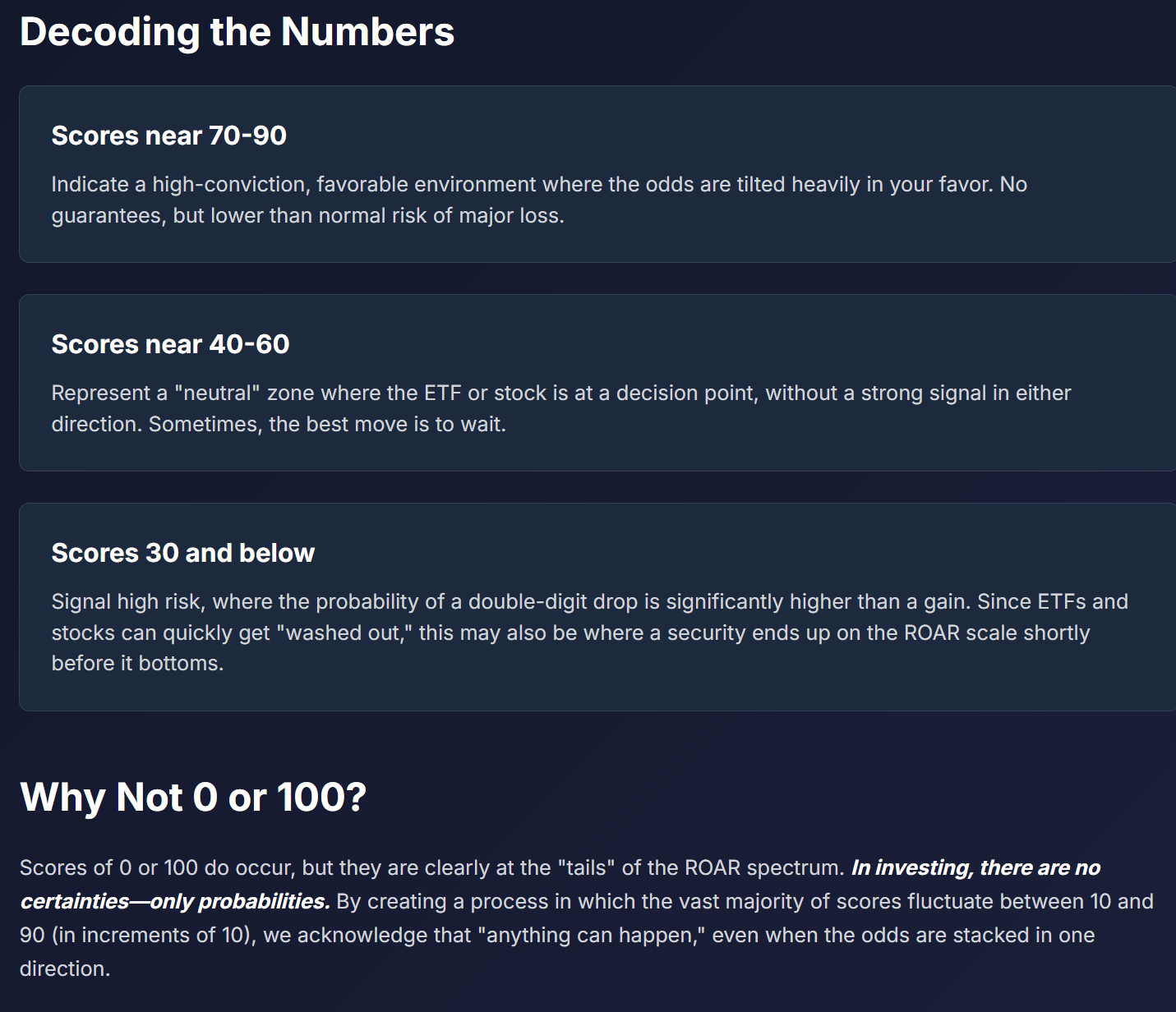
Each of those 3 conditions has a few subsets, creating a scale from 100 to 0. It is entirely based on the combination of strength, opportunity and vulnerability chart pattern at any point in time. Markets are cyclical, and ROAR aims to exploit that fact for our benefit. By seeking out relatively low risk situations, and favoring them over higher risk situations.

ROAR is not a straight “buy or sell” system. That’s all the others! ROAR looks at investing as a balancing act, not as a set of “yes or no” decisions.
Conclusion: The power of a process
You now have a complete, sequential system for building and managing a portfolio. It begins with the simple, powerful act of defining what you will lose and ends with the disciplined execution of that rule.
The power of this approach lies not in prediction, but in process. When fear or greed inevitably strike, you will not rely on your gut. Instead, you will rely on the objective rules you set in a time of calm. That distinction—Process over Emotion—is the true edge that leads to consistent wealth and a smoother investment experience