


(To inquire about the ROAR Flex model portfolio and how to access it, email us at info@SungardenInvestment.com)
By Rob Isbitts | Sungarden Investment Publishing. Creator: ETFYourself.com.
I’ve managed money professionally since 1993, seven years after entering the World Trade Center in NYC as a fresh college grad in 1986. After toiling in the back office and helping portfolio managers create decision-making systems, I eventually became a lead decision-maker myself.
Over three decades later, I’m still at it. While I retired from the business of providing personalized, 1-on-1 advice to individual investors in 2020, I have dedicated the past several years to sharing my “best thinking” with a wider audience of self-directed investors through research and model portfolios at ETFYourself.com.
I run several models, which are on display at ROAR.PiTrade.com. The “flagship” strategy, ROAR 10, is a consolidated, automated, “off-the-shelf” version of the style of investing I used to do as an investment advisor and fund manager.
It is NOT an S&P 500-style portfolio model. Frankly, it doesn’t care what the S&P 500 does, since following it blindly would mean accepting the occasional 30% to 50% crash.
I’m too old for that! And my experience tells me I don’t need to settle for that.
My entire investment framework is built around two things, in a very strict order:
Avoid Big Loss (”ABL”)
Make as much as market conditions allow
That philosophy served me well as an advisor to others for decades. Today, it guides how I manage my own family's portfolio. The ROAR Flex signal model was created so self-directed investors can track that work, and apply it directly in their own accounts.
What is ROAR Flex?
ROAR Flex is my “Best Ideas” portfolio model. It brings my 30+ years of chart-reading, risk management, and market strategy under “one portfolio roof.” It is built around a flexible, absolute-return mission, similar to how classic hedge funds historically managed risk and return, but delivered strictly as informational model signals for self-directed investors to track in their own accounts.
ROAR Flex: Mechanics & Rules
Built on the ROAR 10 Foundation: The strategy uses our automated ROAR 10 ETF model as a base (holding those 10 core ETFs at all times), but adds dynamic position weighting.
Go-Anywhere Extended Universe: The core can be supplemented with tactical additions from single equities, and long, inverse, or leveraged ETFs.
Flexible Timeframes: Positions may be held across days, weeks, or months depending on technical market conditions.
Real-Time Signal Alerts: When market conditions prompt a trade signal or allocation update, alerts are broadcast in real time (via the ROAR.PiTrade.com). Subscribers receive exact target allocations and trade actions made in the model. From there, they can execute manually in their own self-directed brokerage accounts at their own discretion.
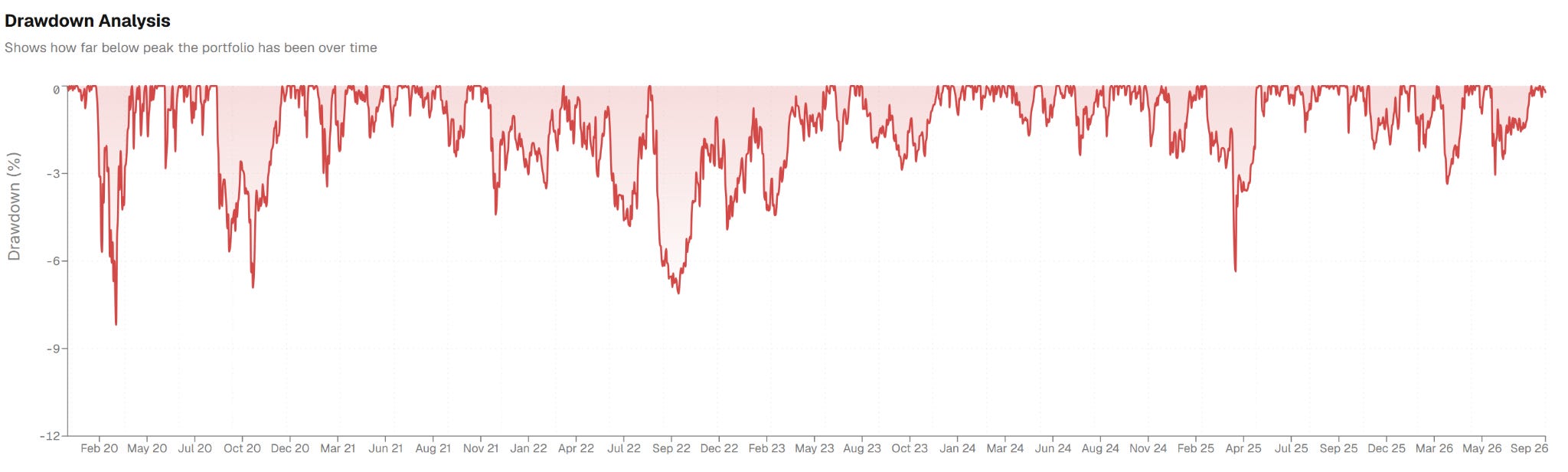
Avoid Big Loss (ABL) 10% Maximum Drawdown Objective: Managed with the strategic objective of aiming to cap peak-to-trough drawdowns at 10% by shifting more capital into cash, T-bill ETFs, or inverse hedges during threatening markets. (Note: Risk targets are strategic objectives, not guarantees against loss of principal).
Historical Context: The ROAR 10 Baseline
Because ROAR Flex expands upon the foundation of our automated ROAR 10 ETF model, that baseline portfolio serves as the best historical proxy for how our tactical risk management behaves in difficult market environments.
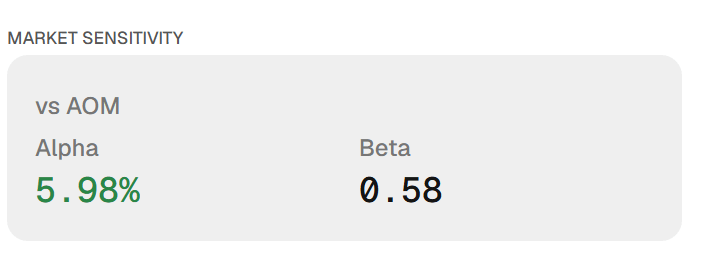
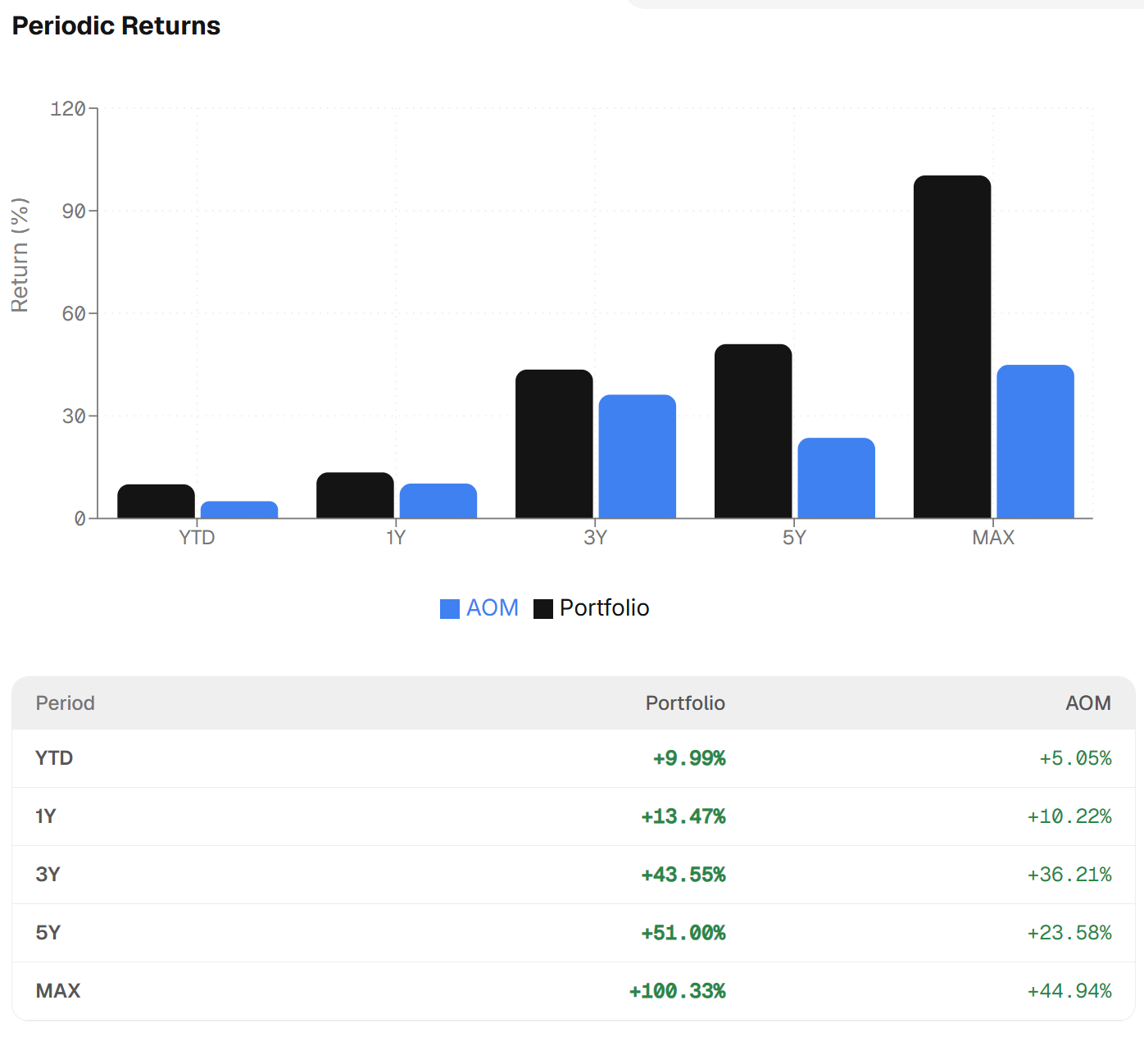
The track record of the baseline ROAR 10 ETF model (inception 1/1/2020) recently crossed the 100% gain mark as of August 31, 2026. Over that multi-year period, it successfully navigated:
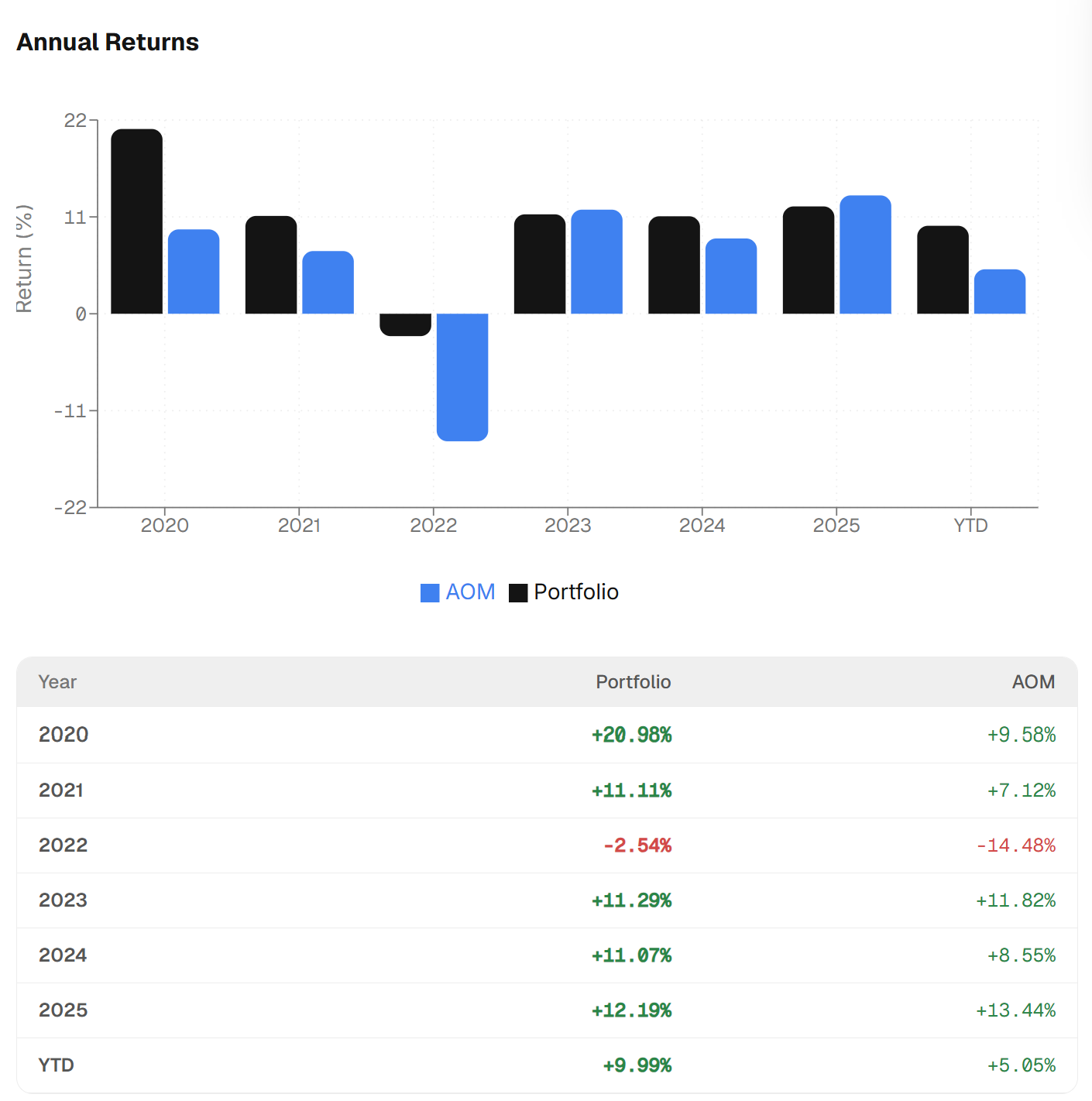
The Covid-19 Shock (2020): S&P 500 dropped 34% in 5 weeks; ROAR 10 finished 2020 up 21.0%.
The Stock/Bond Bear Pair (2022): Both stocks and bonds fell sharply; ROAR 10 held to a minor -2.5% drop vs -14.5% for the Moderate Benchmark (AOM).
The Tariff Tantrum (2025): S&P 500 pulled back nearly 20%; ROAR 10 closed the year up +12.19%.
Backtested ROAR 10 ETF Model Performance (1/1/2020 – 8/31/2026)
(Source: ROAR.PiTrade.com)


(To inquire about the ROAR Flex model portfolio and how to access it, email us at info@SungardenInvestment.com)
Frequently Asked Questions (FAQ)
How is ROAR Flex different from the core ROAR 10 ETF model?
ROAR Flex uses ROAR 10 as a foundation, but operates with a “go-anywhere” approach. It expands position weighting ranges and includes additional single equities and tactical long/inverse ETFs traded on dynamic schedules.
What does “managed like hedge funds used to be” mean?
Historically, classic hedge funds prioritized capital protection and absolute return over rigid index-tracking. ROAR Flex dynamically shifts allocations or deploys inverse setups to navigate and attempt to cushion against difficult market climates.
How does the Avoid Big Loss (ABL) philosophy work?
ABL uses technical risk indicators to cut exposure, raise cash, or buy inverse ETFs when market risk spikes. The goal is to avoid major drawdowns that take years just to get back to even.
Where are my funds held, and how are trades executed?
Your capital stays in your personal brokerage account (Schwab, Fidelity, Interactive Brokers, Vanguard, etc.). You maintain 100% ownership, visibility, and liquidity. When a model signal is generated, you receive a real-time notification to execute the market order on your own.
Are there lock-up periods or withdrawal limits?
None. Because you control your own account, you have full daily liquidity to add, withdraw, or pause model tracking whenever you choose.
(To inquire about the ROAR Flex model portfolio and how to access it, email us at info@SungardenInvestment.com)
Important Regulatory Disclosure
This post is published by Sungarden Investment Publishing. Rob Isbitts is a publisher of financial research and model portfolios, operating under the SEC Publisher’s Exemption. He is not currently a registered investment advisor and does not provide personalized, 1-on-1 investment advice.
All information, signals, and model portfolios are provided for educational and informational purposes only. Subscribers are solely responsible for executing their own trades in their self-directed brokerage accounts. Past performance is no guarantee of future results. Drawdown caps and return objectives are strategic goals, not guarantees against loss of principal.
Has there been a change to the way ROAR Flex works? I do not see the $100k minimum and that "when a model signal is generated, you receive a real-time notification to execute the market order on your own"