

Repeat After Me…
I’ve worked hard.
I’ve built my nest egg.
I just want a reliable, predictable return for the next 15-30 years or so.
So I have one less thing to deal with.
Wait, long-term bonds are now yielding how much?!
Is 5% Return Enough? Why It Might Be.
For much of my investing career, my biggest flaw as obvious to most who knew my: I made investing more complicated than it needs to be. I’ve come to realize, I have a lot of company in that regard!
So in my early 60s, with plenty of great feedback from subscribers and colleagues, I started to rethink how to approach what really is the priority for most Baby Boomers and Gen-X types too:
How much do I need to make in retirement, and for how long?
If you have accumulated enough wealth, your goal isn’t to beat an arbitrary stock market index. Your goal is to map your existing capital against your real-world income needs over a specific timeframe.
And, if you are comfortable allowing a portion of your principal to gradually spend down over your target horizon, securing a 5% baseline floor might get you most of the way there. Just look at how much the entire US Treasury Yield Curve lifted during the first nine months of 2026.
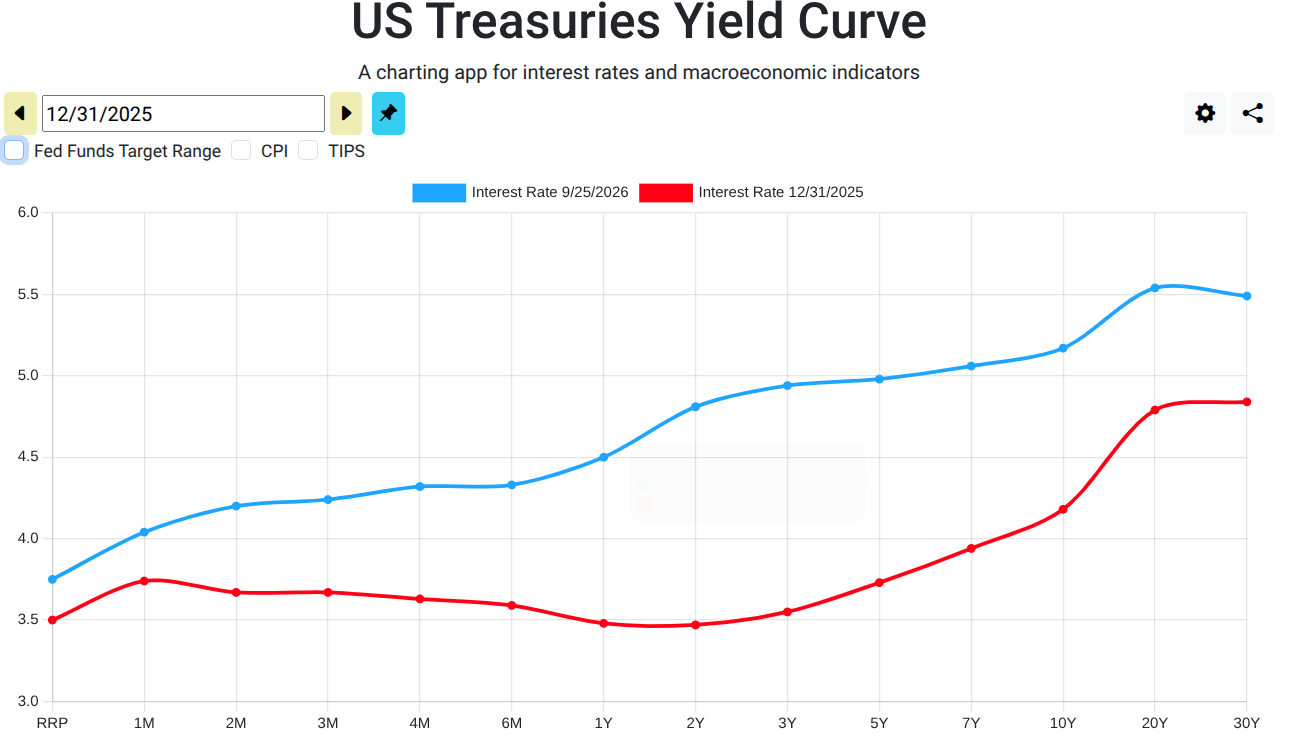
At the end of 2025, the entire curve was below 5%. Less than a year later, bonds from 5 years and longer, out to 30 years, were above that level.
Some would say that’s a problem. I say its a gift!
At least when you consider the long-term history of rates discussed earlier in this E-book. Because barring abnormally high AND persistent inflation for many years to come, 5% “fixed income” return is VERY competitive. And a high enough return to provide tremendous longevity to a retirement cash flow strategy.
I created the Hedged Bond approach, and this E-book, based in large part of that simple premise. I am convinced that this is an opportunity that many must consider.
So I’m leading by example. Everything in this E-book is based on my own investment portfolio.
Why Reading This E-Book might help you.
If you were highly confident you could build a long-term retirement portfolio around a 5% target floor—regardless of what happens with the stock market, interest rates, inflation, or major lifestyle changes—how much of your portfolio would you invest at that 5% target right now?
Take a second and give that an actual number. 20%? 40%? Half your net worth?
This isn’t a trick question, nor is it a guarantee of market returns. It is a fundamental question about how you structure your wealth in an uncertain world.
If your answer is more than zero, keep reading. Because I’m about to break down is the single most overlooked, mismanaged, and misunderstood opportunity in modern investing: the bond side of your ledger.
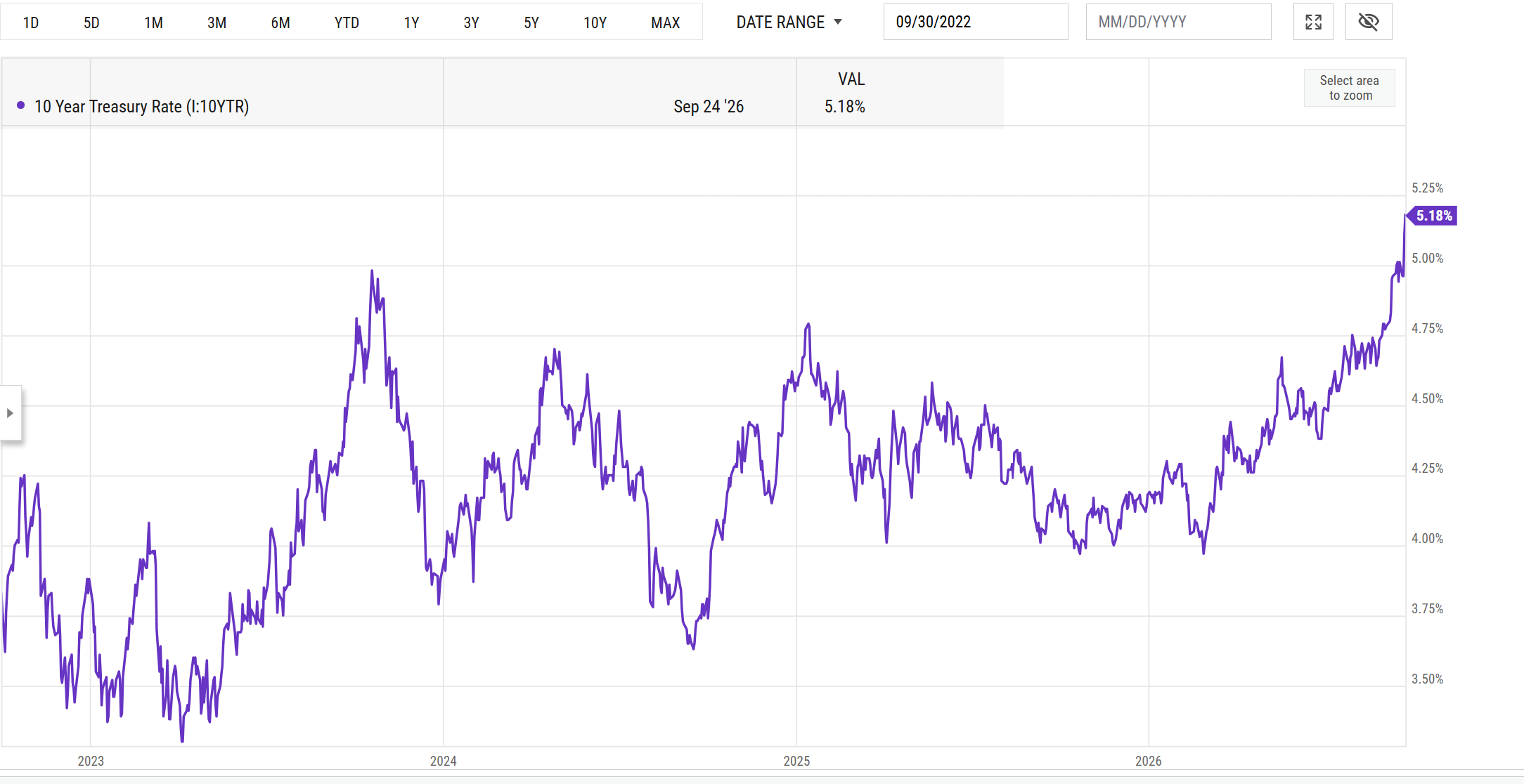
Stock investors use the S&P 500 Index to determine how “the market” is doing. For bond investors, the compatible measure is the yield on the 10-Year US Treasury Bond. Here’s its history since 1998, when the Dot-Com Bubble was in full stealth mode. That’s highlighted in yellow and labeled as 1 in purple, on the chart below.
That continued through March of 2000. Then, it was over. SPY fell by more than 50% over 3 years. QQQ? That lost more than 80% of its value.
That also prompted a rush into US Treasury bonds, the “safe haven trade” for decades before and since. As you see, over the next 22 years, the 10-Year rate fell from 7% to 0.5%. Yes, one-half of 1%.
Groucho Marx was once asked why he invested in T-bills, since they didn’t pay much. His response: “they do if you own enough of them!”
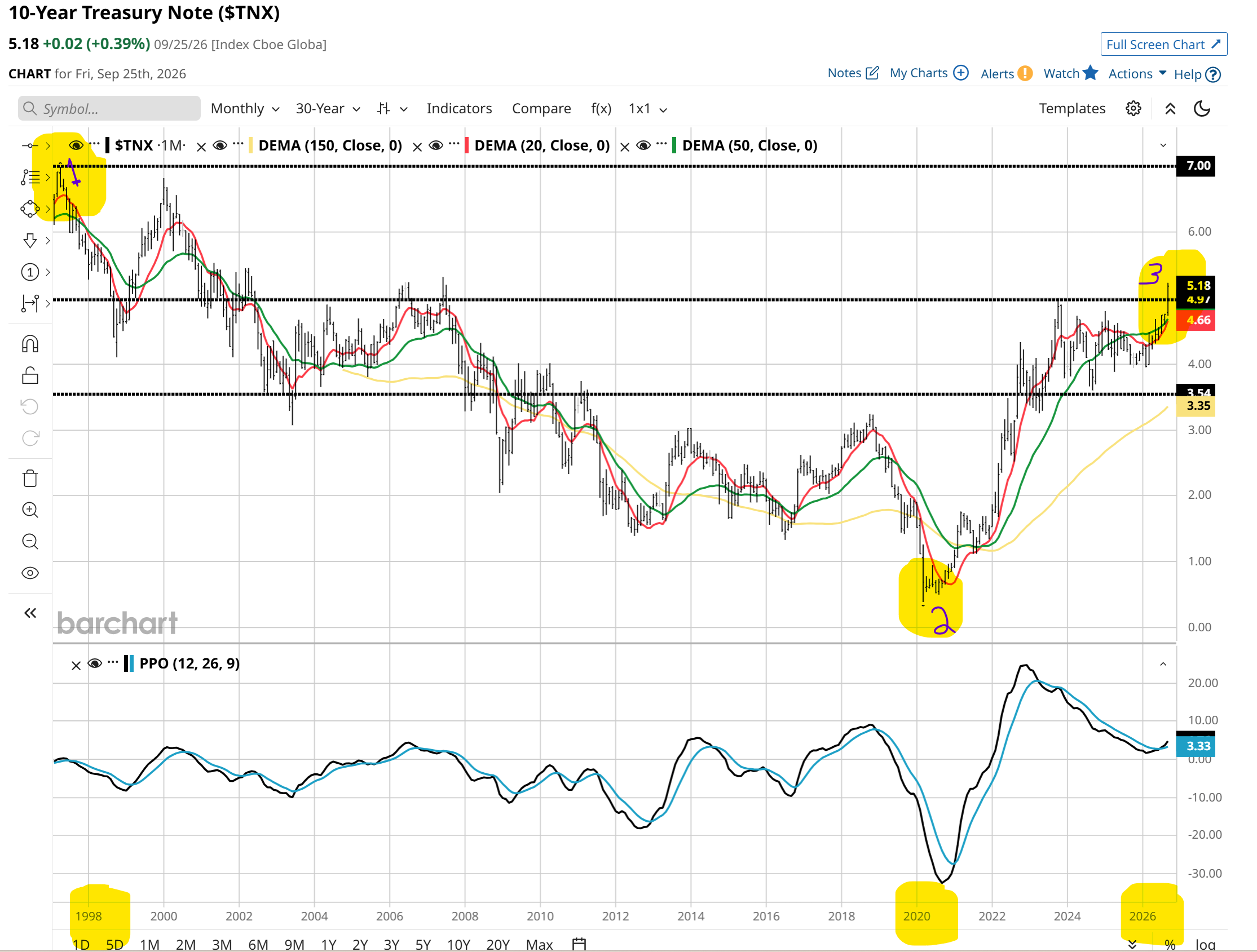
Yet even the king of comedy 100 years ago would be hard-pressed to say that about bond rates in 2020. That’s when a global pandemic took already-low rates from 3% all the way to near-zero. I’ve marked that as 2 in the chart above.
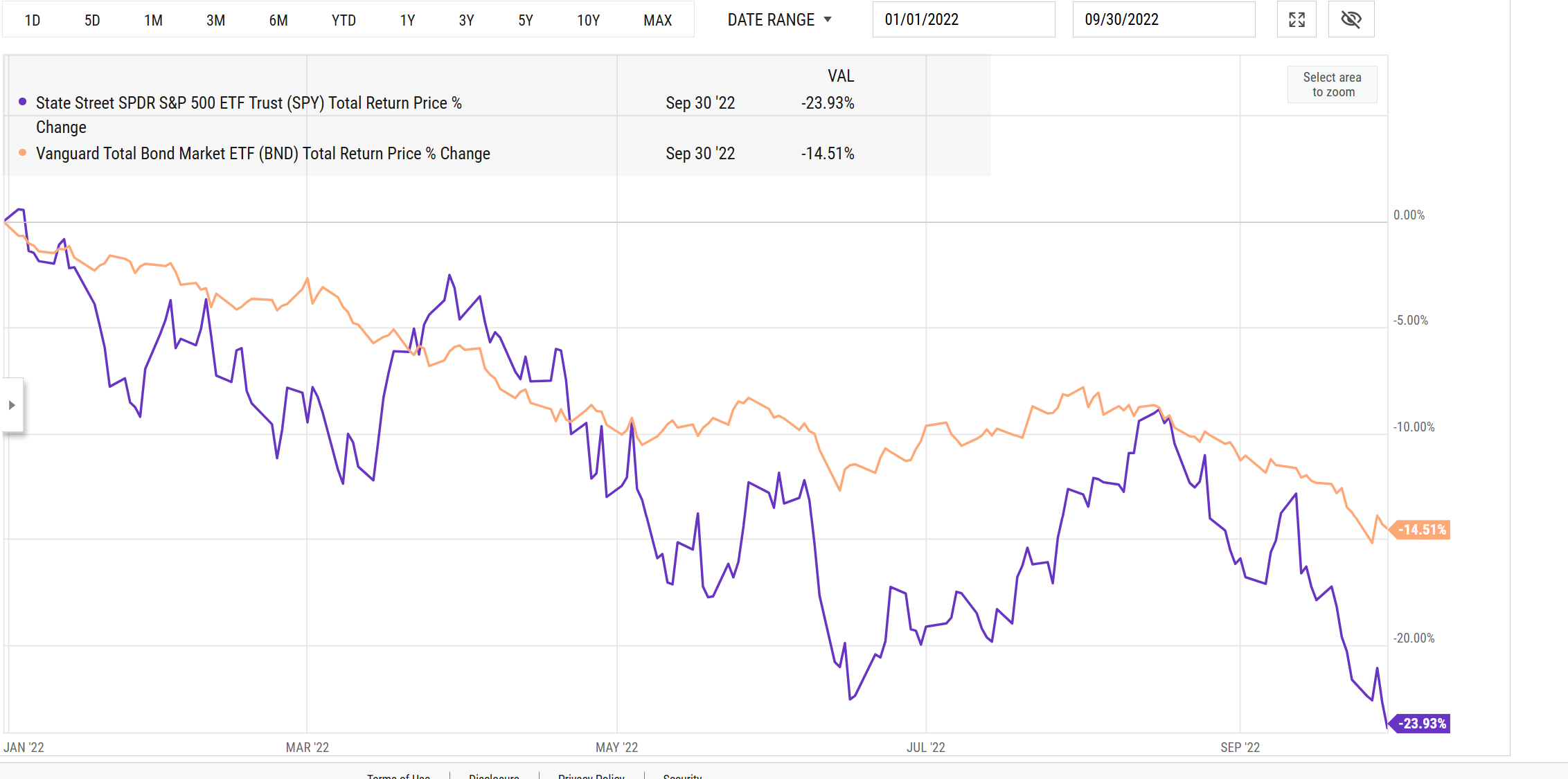
Over the next 7 years, rates first walked, then sprinted higher from those suppressed low levels. In a flash, the 10-Year rate was at 4%. That produced this, the worst stretch of combined stock and bond declines since the 1970s.
Rates then spend the next few years in a wide “trading range,” before busting higher in historic fashion during the second half of 2026.
So, now what? Here’s what we know now, and what will not likely change for many years, at least through the end of this decade.
Rates are much higher than they were.
The stock market is narrowly-focused and inherently unstable.
Ah, but so is the bond market!
Rates might go up for a while, or might reverse lower.
BUT, we can’t predict the future and guess about rates and stock prices will. That strategy does NOT have a high probability of funding our lifestyle in retirement.
If this sounds like something you’d like to continue learning about, read on. Either way, thanks for reading this far. Now, let’s continue by finishing a review of the issues created by this new era for investors, and what I’m doing about it to try to help them.
CHAPTER 1: AI, TV, and Sleeping Well at Night
Recently, I heard a financial TV host stop a conversation with a set of guests and say:
“Hey, people don’t listen to this show to hear us talk about bonds. Let’s go back to chatting about which AI stocks to buy.”
The panelists laughed and agreed, with one adding:
“Yes, let’s not make our audience fall asleep.”
To me—in my early 60s, semi-retired, and 40 years into my Wall Street career—bonds no longer make me fall asleep.
But they do help me sleep A LOT better at night. Not just because they are bonds. It’s about how I now manage my bond portfolio, alongside my other investments.
For years, investors were told bonds were boring, obsolete, or simply something you blindly outsourced through a static 60/40 allocation. Then, as I showed you above, rates went to zero after the 2008 financial crisis and stayed there under Zero Interest Rate Policy (ZIRP) until 2022.
Why? Because modern financial markets would rather delay inevitable market cycles than confront them.
Then, long-term cycles being what they are, inflation and macro economic forces finally overcame those years of artificial suppression. We have entered a brand-new phase of the long-term market cycle. Interest rates are not going back to near 0% any time soon.
Translation: Bond investing is not boring if you understand it, and use it prudently.
The bond market is offering something many investors haven’t seen in a generation: meaningful income, defined maturities through Exchange-Traded Funds (ETFs), and massive potential for capital appreciation if rates fall.
When you know a core portion of your portfolio is set to return a reliable 5% target baseline, it acts as a risk-tolerance booster. You can relax, with you the peace of mind to hold your growth assets through market cycles without sweating every headline. Your “backside,” so to speak, is covered.
Are You an “Avoid Big Loss” Investor?
Hedged Bond isn’t for everyone. If you’re looking to 10x your money on speculative tech stocks or day-trade crypto headlines, this strategy will bore you.
But Hedged Bond is built specifically for you if:
You care more about protecting what you’ve built than flexing stock gains at dinner parties.
You want an income starting line, not a starting line of zero every January 1st.
You realize set-it-and-forget-it index funds (BND/TLT) leave your principal wide open to rate shocks.
You want the confidence to sleep soundly, knowing your baseline retirement income is secured.
CHAPTER 2: The Problem: Bond Prices Still Fall When Rates Rise
Here is the snag: Bond prices still fall when interest rates rise.
Why simply accept that risk?
When most investors decide to “add bonds” to their portfolio, they buy a popular index ETF like ticker BND, AGG, or TLT. And that is where the trap snaps shut.
Broad bond index funds do not own individual bonds to maturity; they roll over bond contracts perpetually. That means they carry perpetual duration risk. When interest rates spiked violently, funds like TLT cratered by over 40%.
A benchmark and an objective-driven portfolio are two entirely different things:
Index Benchmarks (BND / AGG): Useful for tracking broad market exposure, but they offer zero built-in defense against rising rate shocks. That’s why their returns from the start of 2022 through late September of 2026 look like this.
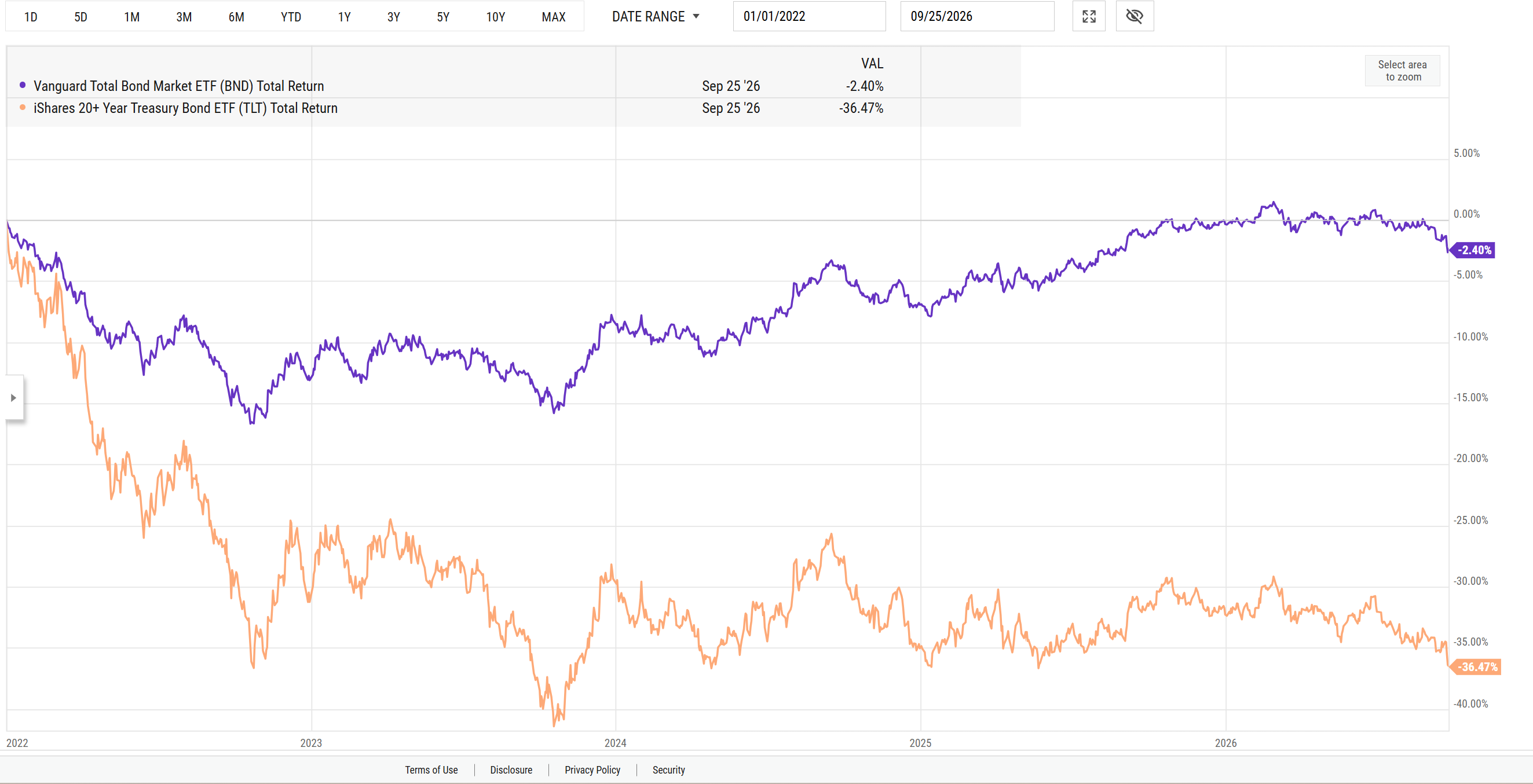
Not exactly a reliable method of investing for the long-run, is it? But don’t blame bonds or bond investing. It is the “index it” mentality that has prompted so many retired and pre-retired investors to simply click a button on their phone and poof! they are “invested in bonds.”
BND, TLT and others have amassed many tens of billions of dollars, as investors likely said “let me add a bond ETF to my stock portfolio.” It doesn’t have to be that way. And it doesn’t have to be complicated.
Hedged Bond Strategy: Built specifically to combine a defined-maturity ladder with active rate-risk management to target a specific income floor while defending principal.
CHAPTER 3: My Credibility Story & The “Anything Can Happen” Reality
Let’s address the elephant in the room right away.
If you ask a traditional Wall Street firm for an income strategy, they’ll hand you a glossy chart showing a 10-year backtested track record.
I won’t do that. Hedged Bond does not have a 10-year live track record, because prior to the recent shift in interest rates, this strategy would have made zero sense.
You couldn’t build a 5% hedged bond portfolio when Treasury yields were sitting at 1.5%. Now, I did build a “neutral” model portfolio, which you’ll see below. I did so simply to be able to respond to the likely, and understandable need, for many investors to see how it might have performed.
That said, I do not pay much attention to that neutral model myself. It does show that investing in bonds, even in the worst of times for that asset class, can be navigated successfully.
However, I am 100% focused on today, tomorrow and the next few decades. That’s how long I hope my own retirement will last. (As I write this in September, 2026, I’m 62 years old, so sign me up for living until age 92, and I’ll take it!).
I didn’t start my career yesterday. I’ve spent four decades studying markets, 27 years as a fiduciary advisor to high-net-worth families, and decades as a portfolio manager and technical analyst. My father was a mid-level executive who lost his job in a 1970s recession and taught himself to trade. He taught me to chart stocks on graph paper with a pencil when I was 16 years old.
I started my Wall Street career in 1986 in New York City. Dad never worked in the only industry I have worked in for 40 years. He and my Mom lived long enough to see me succeed in it, for which I’m very grateful.
Now, in semi-retirement but still actively writing about investment strategy, ETFs, and now bond investing, I am in the position my clients were in back when I was a fiduciary advisor (1993-2020). And, the one my parents found themselves in, back when financial markets operated very differently than they do today.
When my wife and I sold our investment management practice back in 2020, what’s the first thing I did, investment wise? I bought a set of T-bills, and laddered the maturities out a few years. I had made a habit of building bond ladders for some clients during my advisory years, as part of their core portfolio, when it made sense. But then came a long stretch years in which near-zero rates made bond and T-bill investing pointless.
However, a few years ago, when rates started to rise, I doubled-up my research and writing on potential long-term strategies that I could create and manage for my family, focused on bonds and bond ETFs.
As my long-time subscribers and readers know, I built a bond ladder for my own family first. Then, seeing the trend in rates evolve into what I believe is a true regime shift in interest rates, I took another, more proactive step.
Using that bond ladder structure as a baseline, I created, stress-tested, invested in myself, and now offer, an all-ETF, actively managed bond model portfolio. So other investors could follow the process.
Hedged Bond is the output of four decades of experience, and my ongoing mission to take what I’ve learned from 40 years in markets and professional investing, and transfer that knowledge to, well whoever want to access it.
Going forward in modern markets, anything can happen. We cannot rely on market tailwinds or static buy-and-hold assumptions. To be prepared for any climate, an investor needs four pillars:
A Clear Long-Term Goal: Target a real-world income baseline rather than starting at zero every year.
Experience & Coaching: The ability to learn how to navigate in any market climate.
Mastery of the Tools of the Trade: Combining modern ETFs, disciplined portfolio construction, and technical analysis.
An Overriding Risk Management Mentality: Defense first, always centered on Avoid Big Loss (ABL) principles.
CHAPTER 4: Proof of Concept: The Neutral Model (2022–2026)
To demonstrate that a hedged bond approach is practical in real-world markets, I constructed a simple “Neutral” model portfolio—using just 8 static ETFs—and tracked its performance against broad bond benchmarks from January 2022 through September 2026.
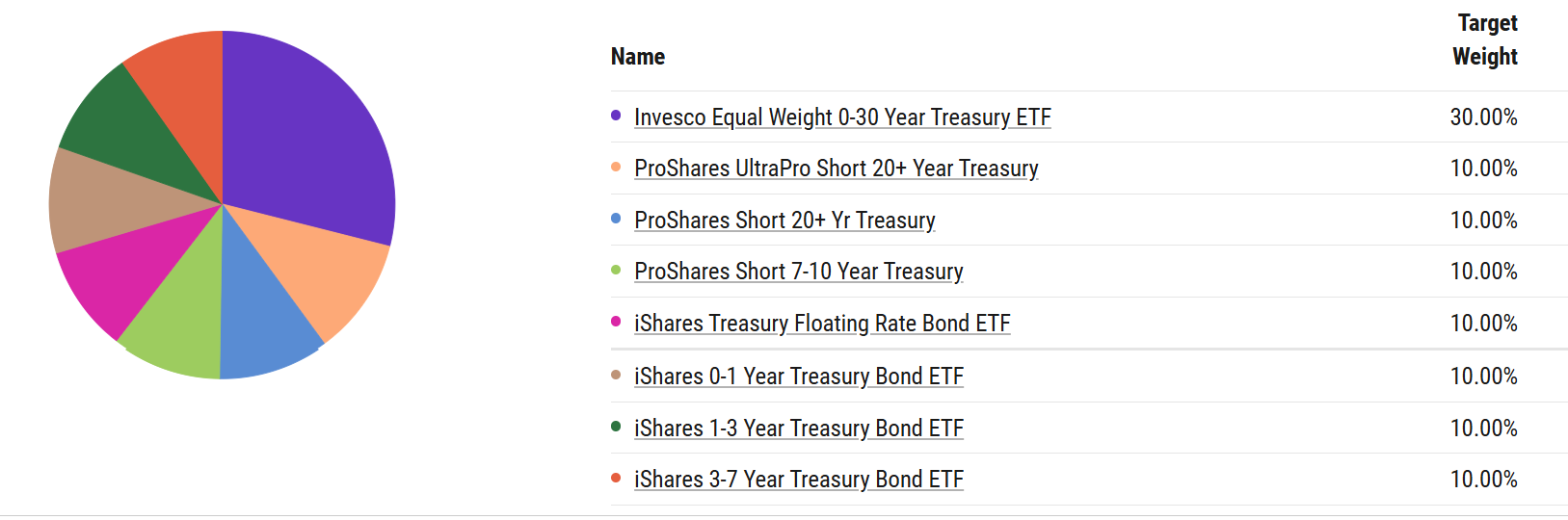
Source for data: Ycharts
This period represented one of the most brutal interest rate spikes and bond crashes in modern financial history.
Here is what the data shows:
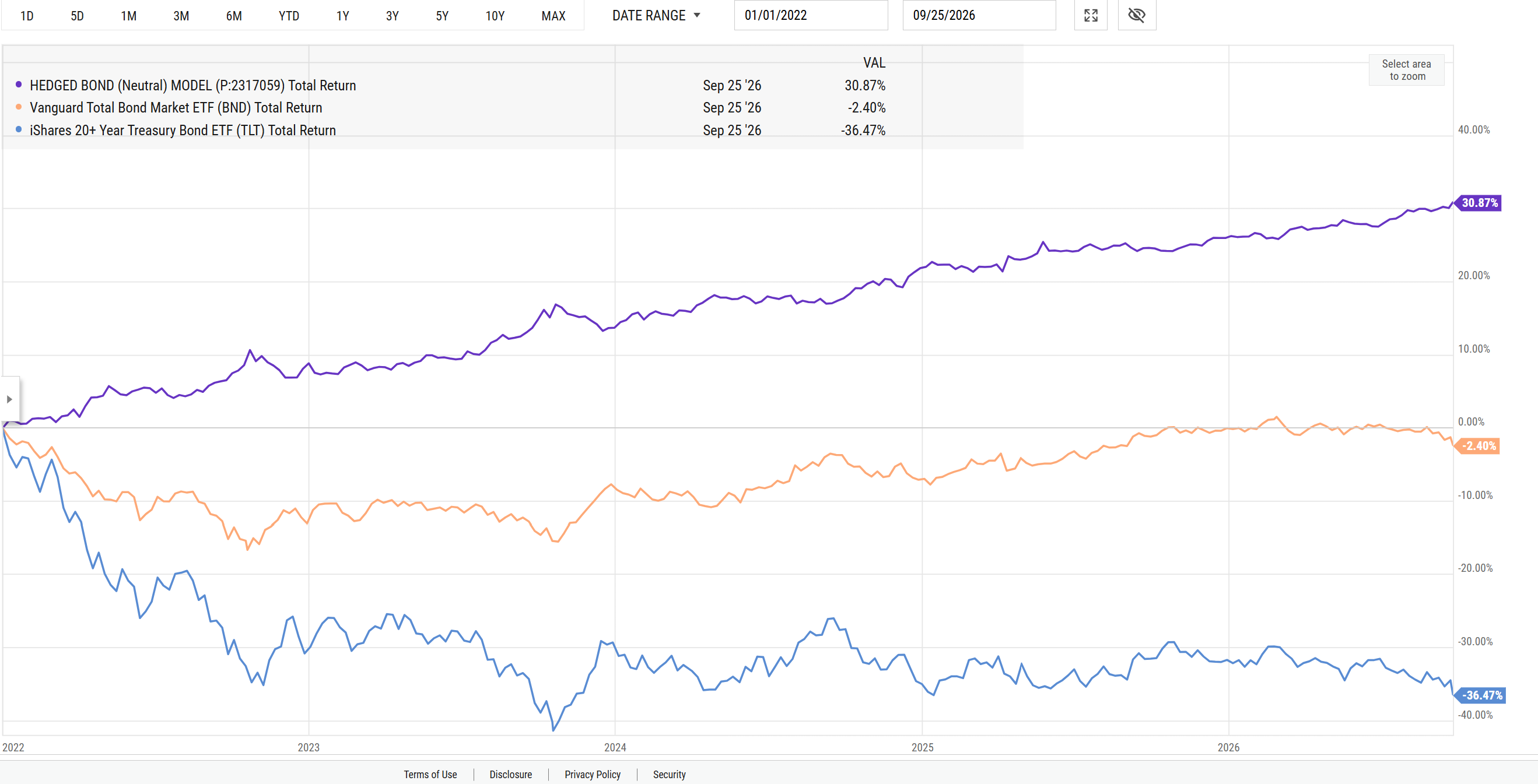
While passive bond index funds lost money over nearly five years, a basic hedged bond framework generated over 30% in total return, more than 5% annualized.
By comparison, BND’s total return was -2%. TLT’s was -36%.
Again, the point of creating this and presenting it to you here is to show what is possible. It only scratches the surface on how the Hedged Bond model portfolio works, and how it will operate going forward.
Hedged bond is not constrained to a set group of ETFs. I have a watchlist of more than 30 of them, and I’m always looking for others. Anything that allows me to pursue the mission here.
And the allocation weights to each ETF are not fixed. I combine that wide “ETF tool box” with my decades of technical analysis and portfolio construction and management. That’s Hedged Bond.
And, while the backtested Hedged Bond (Neutral) Model is far from a replica of what the live Hedged Bond model is, this is worth noting. During this historically poor time for traditional bond investing, the Neutral Model did achieve the 5% annualized long-term return goal. And, it did so with a microscopic 3.3% annualized Standard Deviation.

What does that mean? That this Neutral model portfolio earned its 5% while experiencing very low volatilty. This part of the backtest IS something I aim to maintain in the Hedged Bond model portfolio. Just as we can never forecast exact return and risk levels in an all-ETF portfolio, we can state that the goals are:
At least a 5% annualized return over any 3-year period
Low volatility along the way
One again, this is not a live track record, nor is it a guarantee of future results. It is proof of concept. It shows that when you use the full slate of tools available through modern ETFs, building and defending a 5% baseline return target is realistic. Even when the bond market experiences severe rate shocks.
CHAPTER 5: Build, Defend, and Pursue Upside
I don’t just want the 5% yield from bonds. I want to build a process designed to defend it. Hedged Bond operates across three coordinated pillars:
The Core Ladder (40-70%): Defined-maturity Treasury ETFs (like iShares iBonds) that mature in specific years. They act as liquid surrogates for individual bonds, returning principal at maturity and eliminating perpetual decay in their underlying value.
The Active Hedge (0–30%): Tactical inverse rate ETFs, deployed more when interest rates jump, and eased back when they are calm or falling. As bond prices fall, these hedges gain value, protecting the core principal. You can see it in the impact they had on the Hedged Bond Neutral model portfolio discussed above.
Yield Boosters (10–40%): Option-income strategies and complementary fixed-income ETFs that extract extra yield during range-bound or falling rate regimes.
CHAPTER 6: Let Rates Work For You
What happens if interest rates decline sharply? Earlier in this paper, I wrote:
Interest rates are not going back to near 0% any time soon.
However, as my subcribers know, I am the type that is willing to challenge any bit of “conventional wisdom.” So, let’s do that here.
What if interest rates crash toward zero again, and soon? Maybe we have a global recession that makes 2008 look like a “flesh wound.” Or, perhaps AI is just so darn good, it solves the problem of higher interest rates too.
Frankly, if rates do plunge from a 4-6% range to perhaps 1-2% any time soon, it might be the best-case scenario for those who are proactive about bond investing now.
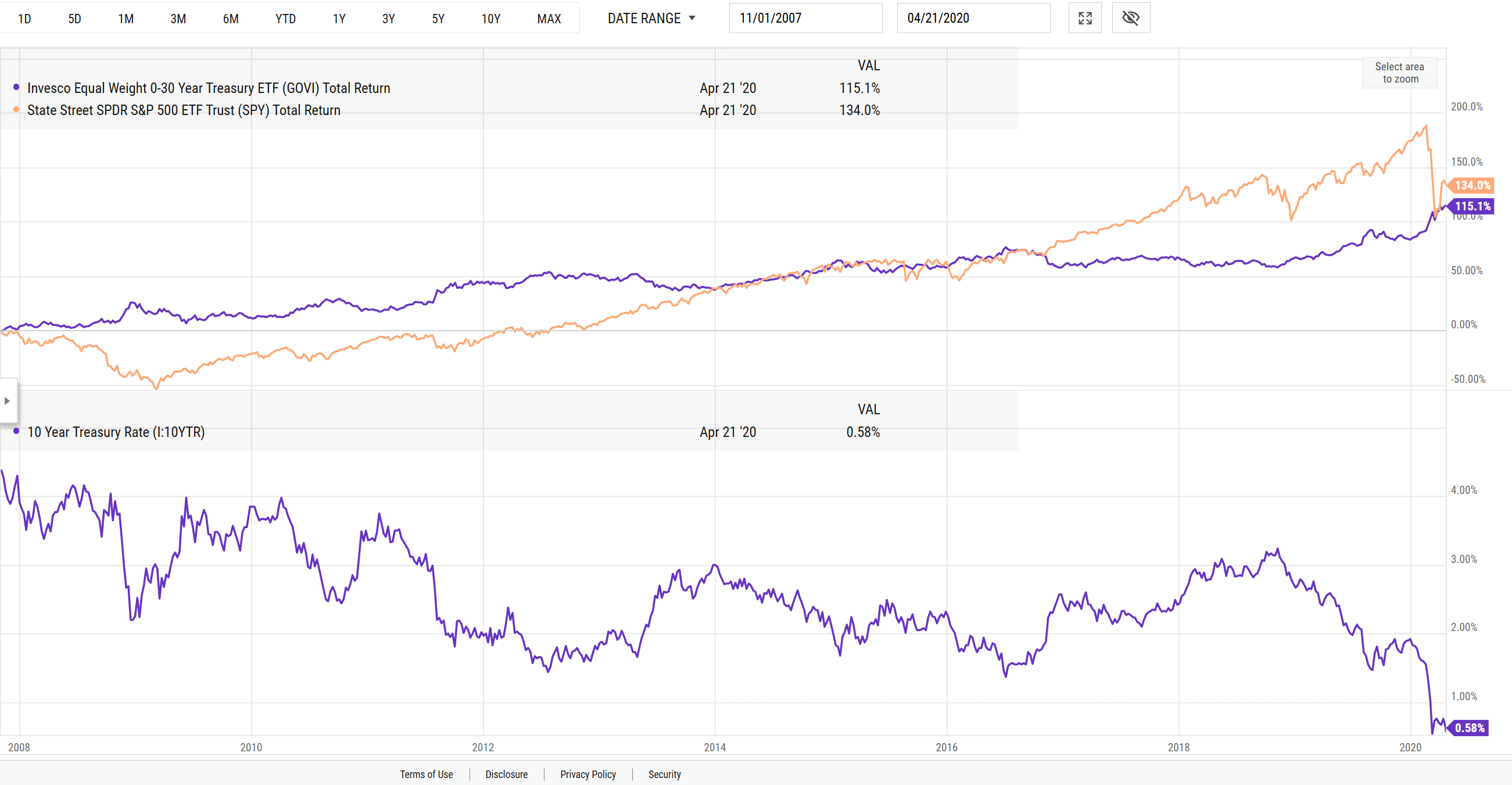
See that chart above? That’s what happened to GOVI, a bond ETF that “ladders” Treasuries from 0-30 years maturity. It has price risk since it does not hold the bonds to maturity. But the last time the 10-year US Treasury rate fell from around 4.5% to 0.5%, GOVI more than doubled. Yes, bonds can be a portfolio’s “growth engine” too.
That’s why I included that orange line above. This period covered more than 12 years, form late 2007 through the initial pandemic plunge in the S&P 500, in early 2020. That orange line is the S&P 500 ETF (SPY).
What do you notice? It ended up right around where GOVI, an unmanaged index of laddered US Treasuries, did.
History shows us what occurs when you own bonds before a rate-cut cycle. In late 2007, 10-year Treasury yields sat around 4.7%. Over the next 5 years, as the S&P 500 crashed and recovered to a total return of just 2.5%, an equal-weighted Treasury portfolio (GOVI) generated a 55% total return as falling rates pushed bond prices higher.
When you combine a laddered core with active risk management, you collect attractive income today, defend against rate hikes, and position yourself to capture capital appreciation if rates drop.
How Securing Your Bond Floor Unlocks Equity Upside
Here is something most stock market enthusiasts miss: Fear ruins stock returns.
When 100% of your wealth is sitting in equities or unhedged index funds, every market dip feels like a existential threat. You panic, you sell at the bottom, or you freeze up when great buying opportunities appear. And if it worked out the last few times, that says nothing about the figure. It only adds to complacency and overconfidence.
But when you establish a 5% target floor on the bond side of your portfolio, your entire mindset shifts. Knowing your baseline return is more predictable and actively hedged gives you the psychological freedom to hold your stocks through market cycles without sweating every headline. Defense enables offense. Or to put it another way, sometimes the best offense is a good defense!
CHAPTER 7: A Total Cash Flow Focus In Retirement
If you leave $100,000 untouched at 5% interest, it generates $5,000 a year forever.
But you can’t take your wealth with you. Assuming your bond portfolio is not 100% of your retirement assets, if you amortize that $100,000 down to $0 over 20, 30, or 40 years while maintaining a 5% target return floor, look at how much more annual cash flow you unlock:
Over 15 Years: $100,000 generates $9,634 / year ($803 / month).
Over 20 Years: $100,000 generates $8,024 / year ($669 / month).
Over 30 Years: $100,000 generates $6,505 / year ($542 / month).
Over 40 Years: $100,000 generates $5,828 / year ($486 / month).
And unlike an annuity or a pension, YOU are in control of the cash flow plan.
How to Calculate Your Retirement Baseline
Note: We prepared a separate DIY calculator for this, available to subscribers.
Take your portfolio size, divide it by $100,000, and multiply it by the payout for your desired timeline:
Got $500,000 and need 20 years of income?
5 × $8,024 = $40,120 / year at at 5% return floor target.
Got $1,000,000 and need 30 years of income?
10 × $6,505 = $65,050 / year.
Once you match your capital to your real-world lifestyle needs, the anxiety disappears. You aren’t guessing about stock market returns, and you aren’t leaving your bond principal open to unhedged rate shocks.
Chapter 8: Hedged Bond - A Summary
Hedged Bond is designed to achieve four clear, real-world objectives:
Make a 5% annualized return the long-term target floor.
Do so by actively manage the rate risks that interfere with it.
Make as much above that long-term target rate as possible.
Restrict portfolio drawdowns to under 10% (or 5% if possible)
What Hedged Bond Is Not
Not a guarantee. But a target.
Not buy-and-forget.
Not simply another bond index benchmark.
Build the floor.
Defend the floor.
Then look for the upside.
That’s Hedged Bond.
Don’t just collect 5%. Defend it. And Increase it.
In late 2026, we are sitting at a generational entry point for yields that we haven't seen in 20 years The Hedged Bond model portfolio and the ongoing research the drives it are already helping investors attack these historic market conditions head-on.
If you are ready to start building your floor, and capitalizing on everything you read about in the E-book, you are one click away. See below to be directed to our research site, and choose the path that fits you best.
Chapter 9: Become Your Own Hedged Bond Portfolio Manager. Or Outsource It To Us.
You can access Hedged Bond in two distinct formats:
Track my personal model positions and trades via emailed model signals.
Have my model traded for you by a Registered Investment Advisor (RIA)
For details on both solutions, visit ROAR.PiTrade.com.
Important Disclosure: The 5% return figure is a strategic portfolio objective and target, not a guarantee or promise of performance. Hedging strategies carry costs and may fail to fully offset losses during extreme market conditions. Bond prices fall when interest rates rise. ETFs trade on exchanges and may trade at a premium or discount to NAV. Inverse ETFs and option-driven ETF strategies carry unique risks, including compounding drag and counterparty exposure. Past performance is no guarantee of future results, and all investing involves the risk of loss.
Rob, great piece—your 3-pillar Hedged Bond framework makes a ton of sense, especially the contrast between passive duration traps (BND/TLT) and defined-maturity cash flow planning.
Since you use iShares iBonds for Pillar 1, I’m curious how you view my current two-fund setup: I hold LDRT (iShares 1–5 Year Treasury Ladder ETF) paired with IBDW (iBonds Dec 2031 Corporate Term ETF, ~5.8% YTM) to clear the 5% floor while keeping effective duration tight (~2.4 to 4.0 years).
Two quick questions on how this compares to your approach:
Auto-Roll vs. December Liquidation: Because LDRT automatically sells its front rung every June to roll into a new 5-year rung, it never actually matures to cash like individual iBonds (IBTH–IBTL). Do you like LDRT as a one-ticker core, or do you prefer owning the individual iBonds rungs directly so 20% of principal liquidates at par every December for your Chapter 7 cash-flow spend-down?
Structural Short Duration vs. Longer Rungs + Hedges: Does keeping the ladder inside 5 years (LDRT + IBDW) give up too much yield and Chapter 6 rate-cut upside compared to building a longer Treasury ladder and defending it with your Pillar 2 inverse rate ETFs?