


Investing has changed. Algorithmic trading, the popularity of index investing, the continuous news cycle have helped investing go mainstream. But with that evolution comes massive hype from unproven investing sources, many of whom have never navigated a bear market.
At the same time, the crowding of so much wealth into the S&P 500 index has led to a near-total “risk on/risk off” situation. As a result, we need to retire much of the traditional investing playbook. For those who see investing as more than simply relying on the S&P 500 to get them to retirement and/or keep them there, ROAR 10 was created. Here’s a look at this model portfolio strategy, how it works and how it has performed in a back tested study we performed.
ROAR 10: an ETF portfolio for the times we live in
The ROAR 10 portfolio is built on a simple philosophy: If you take major losses off the table, the gains tend to take care of themselves. Instead of guessing which securities will go up, this strategy focuses on what we can actually measure: Risk.
By owning a set of 10 ETFs, each chosen to play a specific role in the total portfolio, owning them at all times and tactically adjusting their position sizes, the model seeks to minimize exposure to assets at high risk of a major decline while staying positioned for growth.
The Roster: 10 Assets, 10 Roles
Every one of these 10 ETFs has a permanent seat at the table. We don’t guess which one will “win”; we scout which ones are currently most at risk of “losing.”
Growth: QQQ (Nasdaq 100), DIA (Blue Chips), and IWC (Micro-Caps). These drive the portfolio forward.
Protection: BIL (Treasury Bills), BTAL (Market Neutral), and VIXY (Volatility). These are the tools used to slow the portfolio down. They are always present, but their position sizes expand significantly when market danger is scouted. They also give the portfolio a fighting chance of making money in down markets.
Lower Correlation contributors: GLD (Gold), PDBC (Commodities), GOVI (Treasuries) TBF (Short Treasuries),. These help the portfolio navigate inflation or interest rate shifts that can rattle traditional stock-and-bond holdings.
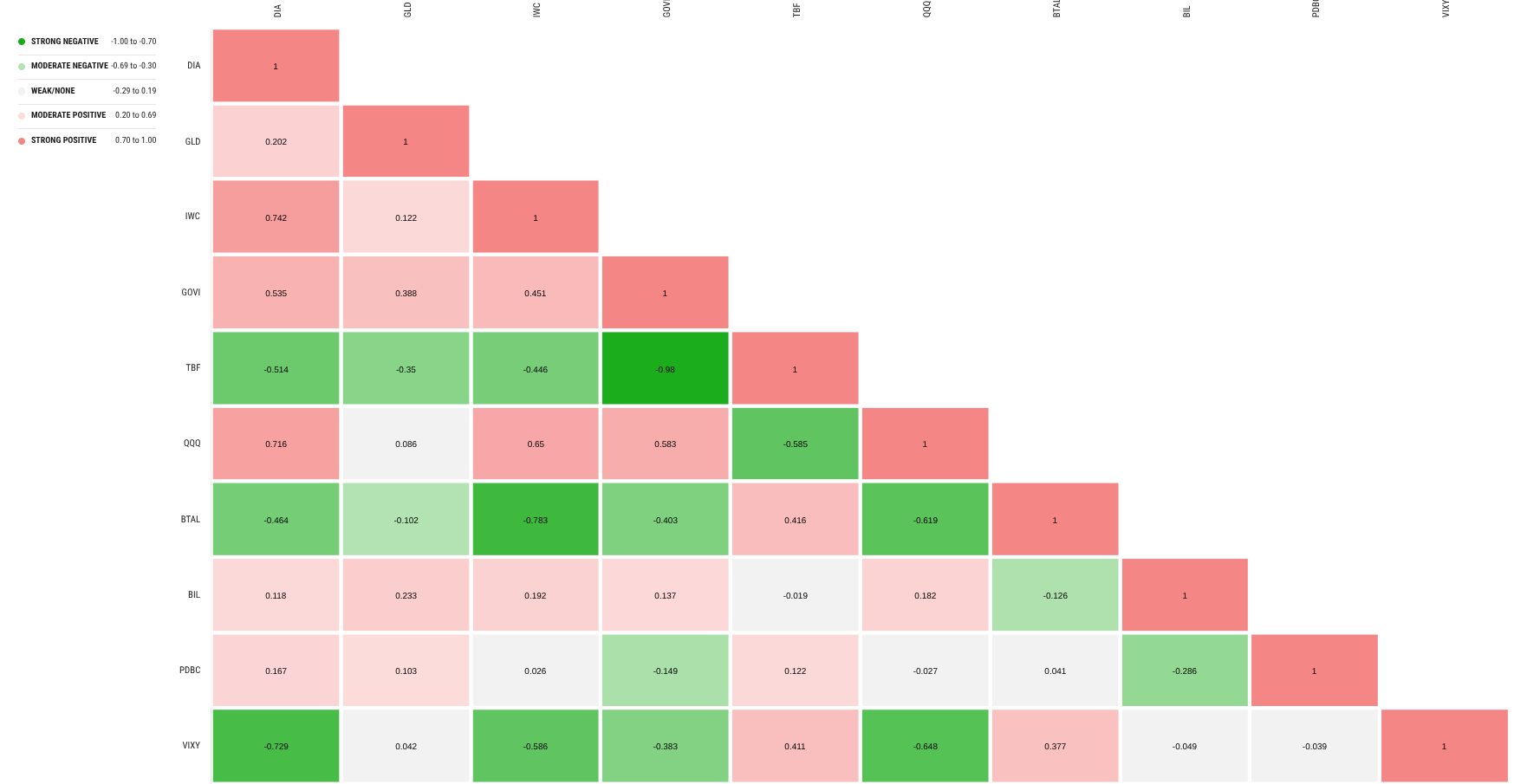
Here’s that low correlation in action. This table shows how much in sync each of the 10 ETFs is with the others. If we were looking at 10 very similar ETFs, the whole table would look like that dark pink diagonal section at the top.
Instead, there is hardly any dark pink. That indicates that these 10 ETFs tend to move independently of each other. Translation: ROAR 10 is structured to provide an opportunity to succeed in a very wide range of market climates. This is what makes it so different from the masses of traditional approaches.
The ROAR Score: A proprietary risk measure, based on 45 years of hands-on technical analysis
The ROAR Score, created by ETFYourself.com creator Rob Isbitts, serves as the central intelligence of the strategy, acting as a real-time “scouting report” for market health. Rather than attempting to predict the next big winner—which often descends into guesswork—the score measures the objective risk of a major decline.
It monitors price trends, volatility and historical tendencies across the financial landscape to estimate the risk of major loss in any security, at any point in time. ROAR Scores are part science and part art, in that investment analysis is never perfect. However, ROAR swaps out “finding big winners” for “minimizing maximum regret” across the portfolio.
When the ROAR Score signals that risk for an ETF in the ROAR 10 portfolio is accelerating, the portfolio doesn’t exit that market. Instead, it shifts its weight downward, using that cash to increase the allocation to ETFs whose risk is judged by ROAR to be decreasing. Or, if there is a temporary shortage of such parts of the portfolio, the cash ETF (BIL) serves as the “residual” portfolio position.
The bottom line: capital preservation is prioritized before a market pothole becomes a catastrophic crash.
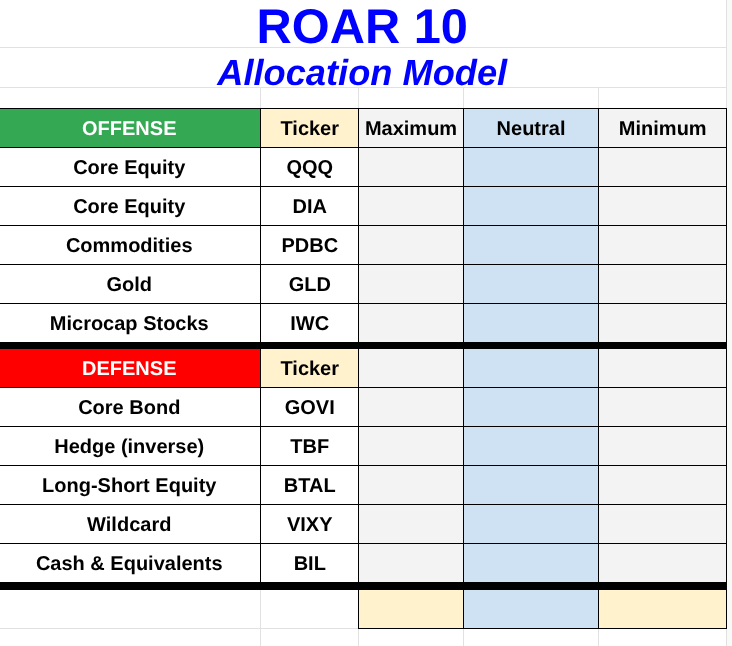
This chart shows the maximum and minimum weightings which apply to each of the 10 ETFs in ROAR 10. The “neutral” weight is what the allocation is expected to be during periods in which risk is judged to be closer to average.
ROAR is essentially an automated, high-powered “chart reader” based on Rob Isbitts’ decades of chart-reading. It has served as the backbone of his ETFYourself.com investment research site on the Substack platform.
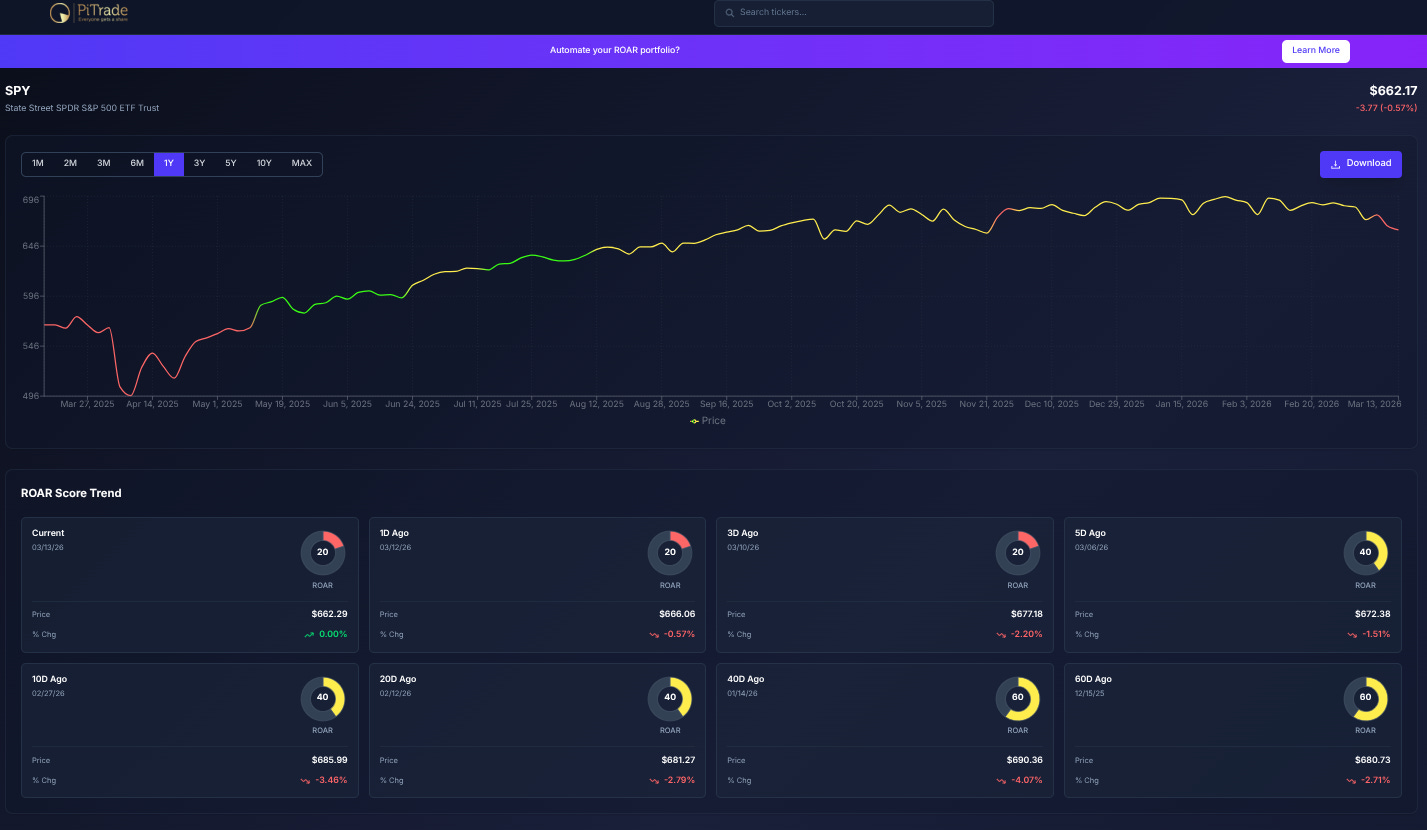
However, as opposed to manually reading every chart every day, ROAR Scores are generated on nearly every ETF and stock, through a research portfolio Rob created with PiTrade.com, at the site ROAR.PiTrade.com.
ROAR Scores in action
When the ROAR Score signals that risk is accelerating, the portfolio doesn’t exit that market. Instead, it shifts its weight from growth-oriented assets to defensive ones, so that capital preservation is prioritized before a market pothole becomes a catastrophic crash.
To turn this intelligence into action, each of the 10 ETFs is assigned a Neutral, Minimum, and Maximum range. This framework ensures the portfolio is never “out of the game” but always solidly protected.
The Neutral setting represents the standard baseline for a stable market. If the ROAR Score detects rising danger, the model downsizes assets toward their Minimum floor. Conversely, in a healthy bull market, the model pushes the gas pedal by moving assets toward their Maximum limit. This systematic re-sizing removes emotional bias, ensuring that position sizes are dictated by measured risk rather than investor impulse.
Note that with a range of ETF assets in ROAR 10, a rising ROAR Score for a defensive asset often implies higher risk to the stock or bond markets, or both. As opposed to many allocation strategies that offer very limited “escape hatches” which the markets act uniquely poor, ROAR has many ways to try to profit, in virtually any environment.
The Story of the Backtest: Scouting for Risk (2020–2026)
The history of the ROAR 10 backtest is a story of continuous scouting. The model isn’t looking for Alpha. It is looking for Danger. Because over a market cycle, avoiding danger is a major factor in generating long-term returns.
The 2020 Pivot: Entering the pandemic, the model scouted a massive spike in equity risk. It didn’t exit the market, but it shifted the weight. It dialed down high-volatility players like IWC and QQQ and redirected that capital into primarily BIL and GLD. By taking the risk of a major equity decline off the table, the portfolio stayed stable while the broader market crashed.
The 2022 Traction: When both stocks and bonds struggled, the model identified the risk in traditional fixed income. It leaned on PDBC (Commodities) and TBF (Inverse Treasuries) to act as shock absorbers. By having these 10 diversifiers always available, the portfolio found traction on a road where 60/40 portfolios were sliding.
Capturing the Lead (2024–2026): As the risk of a major decline subsided, the model shifted the weight back toward the proverbial gas pedal. Because IWC, QQQ, and DIA were always in the portfolio, the model didn’t have to “buy back in”—it simply increased their position sizes. This allowed the portfolio to capture a solid portion of the broad stock market’s gains.
What to Expect: Priority on Protection
When explaining ROAR 10 to investors, the focus is on the Defensive Side of the Ball:
No Guessing: We don’t predict which of the 10 will go up the most. We scout for which of the 10 are currently at the highest risk of a major drawdown and reduce that exposure.
Always Invested: We never go to 100% cash. By keeping all 10 ETFs in the portfolio, even at small position sizes, at all times, ROAR 10 is always ready to participate when the market turns positive. Cash is a solid hedge, but in times of sustained market crisis, having a few ETFs which tend to rise when stocks or bonds fall is a significant advantage versus traditional defensive or “market timing” strategies.
Risk Management First: Our primary goal is to take the 30% or 40% loss off the table. Once the “major bad thing” is avoided, we seek to make as much as possible with the remaining growth exposure. The model’s backtested historical performance
Conclusion
ROAR 10 is for investors who understand that the best offense is a great defense.
By constantly scouting for risk and adjusting the position sizes of our 10 core assets, the model portfolio aims to protect capital first.
That creates a smoother, more resilient path to long-term wealth.
Past Performance: backtested analysis
(Sources: ROAR.PiTrade.com and Ycharts)
IMPORTANT: The following analysis is based on a hypothetical backtest. Backtested results have inherent limitations, as they are designed with the benefit of hindsight. This is for informational purposes only and does not constitute investment advice. Past performance—real or hypothetical—is no guarantee of future results.
ROAR 10 vs. Conservative Allocation ETF (AOK)
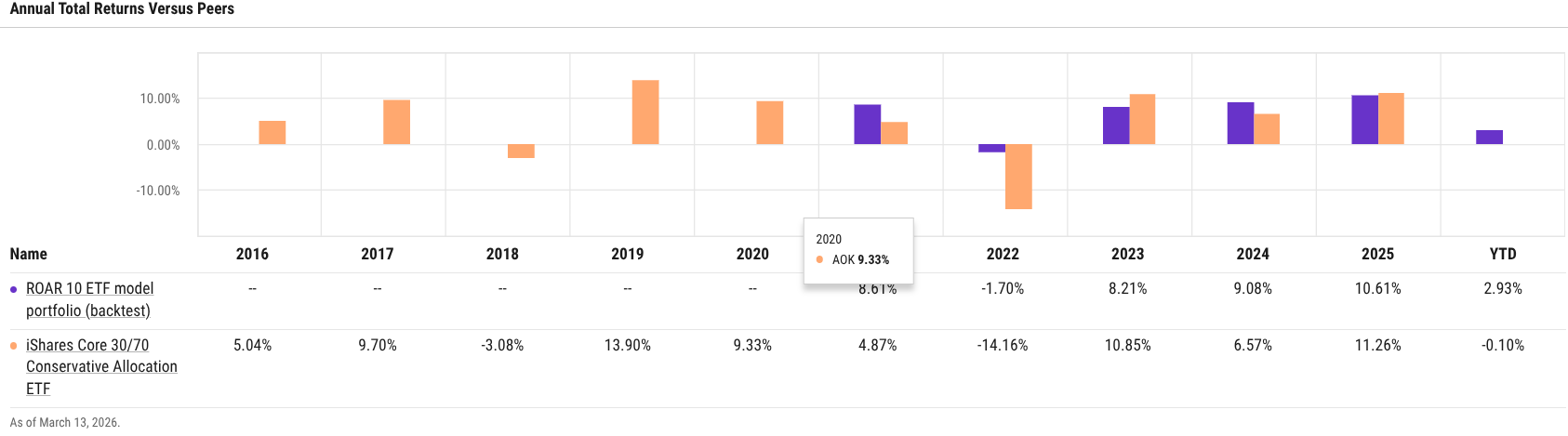
ROAR 10 is by definition a conservative portfolio strategy, based on its “defense first” approach to investing. As this chart below shows, it held its ground during the 2020 Covid shock and other market plunges since. Because it is always structured and prepared for that purpose. The ability to keep capital intact during such periods is a key factor in generating competitive long-term returns.
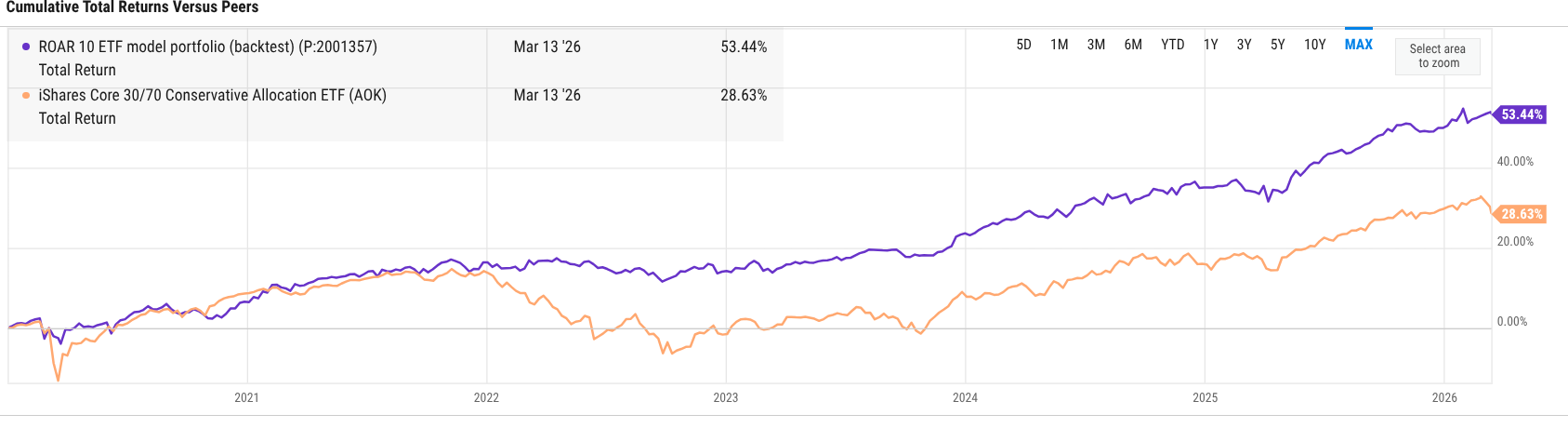
ROAR 10 outperformed a traditional conservative stock-bond approach. (AT=All-Time returns, inception 1/1/2020).

ROAR 10 exhibited a consistent return pattern on an annual basis from 2020-2025.
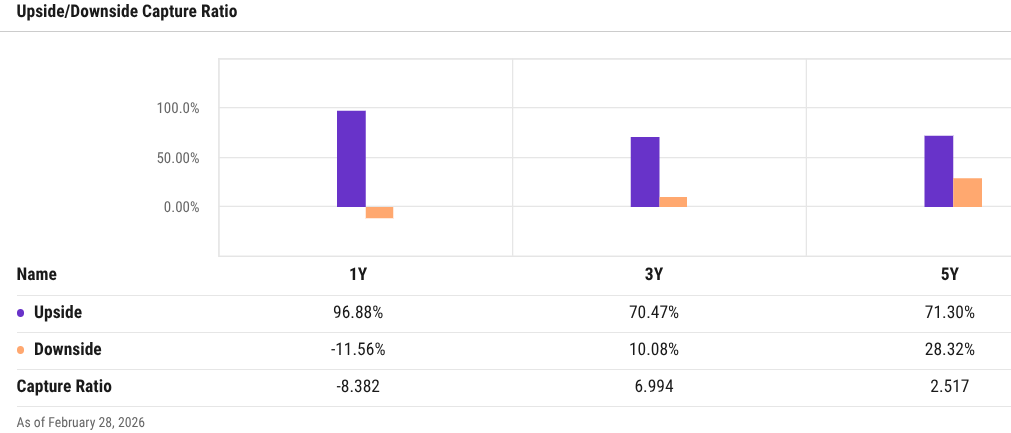
Where the traditional role of bonds as a stock market hedge has been less reliable this decade, ROAR 10 has been able to capture most of the upside of a conservative stock/bond mix, but with far less downside.
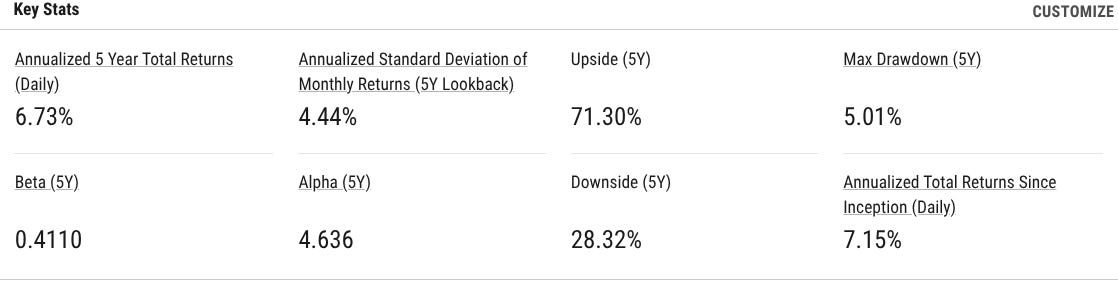
Standard Deviation is a standard and pure measure of a strategy’s volatility, since it tracks the variability of returns versus its long-term average. ROAR 10’s 5-year Standard Deviation of 4.4% is about that of a 5-year US Treasury Note, but with much higher returns. That produced a 5-year “alpha” to AOK of 4.6%.
Most importantly, the maximum drawdown was only 5%. This, amid a period including multiple stock market declines of 20-30%, and the worst year for bonds in half a century, It is that controlled decline in value which can potentially result in a more comfortable investment experience, as opposed to the gyrations we’ve become so used to.
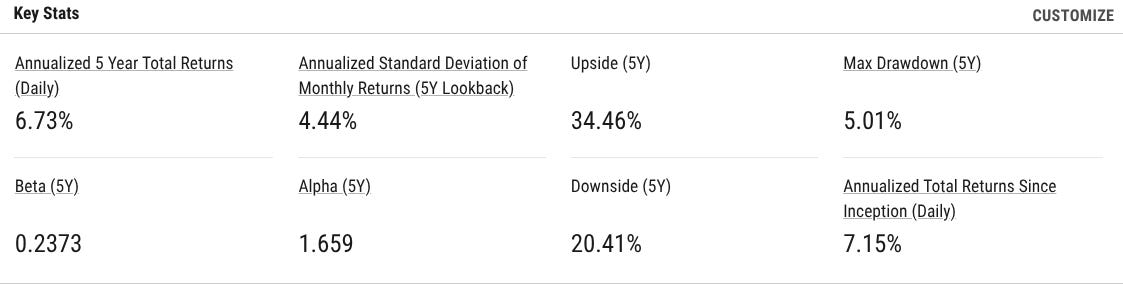
ROAR 10 vs. SPY ETF
To help investors understand ROAR 10’s backtested performance versus the S&P 500 ETF (SPY), here is a summary table over the past 5 years. A beta of under 0.25, strong alpha, and an up/down capture of 34%/20%.
Concluding thoughts
Investors have been conditioned over the past decade or so. Market declines in the broad averages have been brief, and the return of the S&P 500 index has masked growing weakness in other areas. This is particular the case since interest rates re-established higher levels after many years sitting near zero, due to central bank policy.
As we see it, investing is NOT “beat the S&P 500.” That would equate to be OK with making or losing about 40% in a single calendar year. ROAR 10 was created by Rob Isbitts to offer investors a path to follow, in cases where simply tracking the S&P 500 up and down over time is an uncomfortable proposition.
For further information
For more information on the ROAR 10 model portfolio, sign up for ETFYourself.com on Substack and/or email us at info@sungardeninvestment.com.
For information on how to have the ROAR 10 model portfolio “copy-traded” for you, visit PiTrade.com or email support@PiTrade.com.
Backtest & Risk Disclosure: ROAR 10 is a hypothetical model. Backtested performance does not represent actual trading and may not reflect the impact that material economic and market factors might have had on decision-making if the assets were actually managed. Investors may lose money. Strategic shifts in the model (e.g., into VIXY or TBF) involve specialized risks, including volatility and interest rate sensitivity. All figures are gross of fees, which would reduce actual returns.