


It was a solid October around here. And November is off to a very nice start.
Months like the last one remind me of why, while I’m not the “make me 50% in a year” guy, I AM the defensive coordinator, so to speak.
My research is designed to help investors and financial advisors manage rougth markets. And profit from them. That is on full display right now, across our model portfolios. And in the twice-weekly posts here.
NOTE TO SUBSCRIBERS WITH ACCOUNTS AT SCHWAB:
As noted here recently, we FINALLY have a way for you to access my Hedged Bond ROAR Flex, ROAR 10 and Dow 30 models using your existing Schwab accounts. To include all who are interested, we’re offering a free look this month at our live sessions.
Register HERE for Tuesday’s live Zoom session, where I’ll introduce our new Schwab connection.
Tuesday, November 3, at 4 PM EST.
For those who followed my weekly “Fresh Charts” grid showing what I assessed to be the best and worst chart “setups,” you’ll recall my complaining to myself that I could not find any or many positive setups for weeks.
Then, this happened. And it is still happening. And from the looks of it, in the words of Al Pacino, the stock market is “just getting warmed up!”
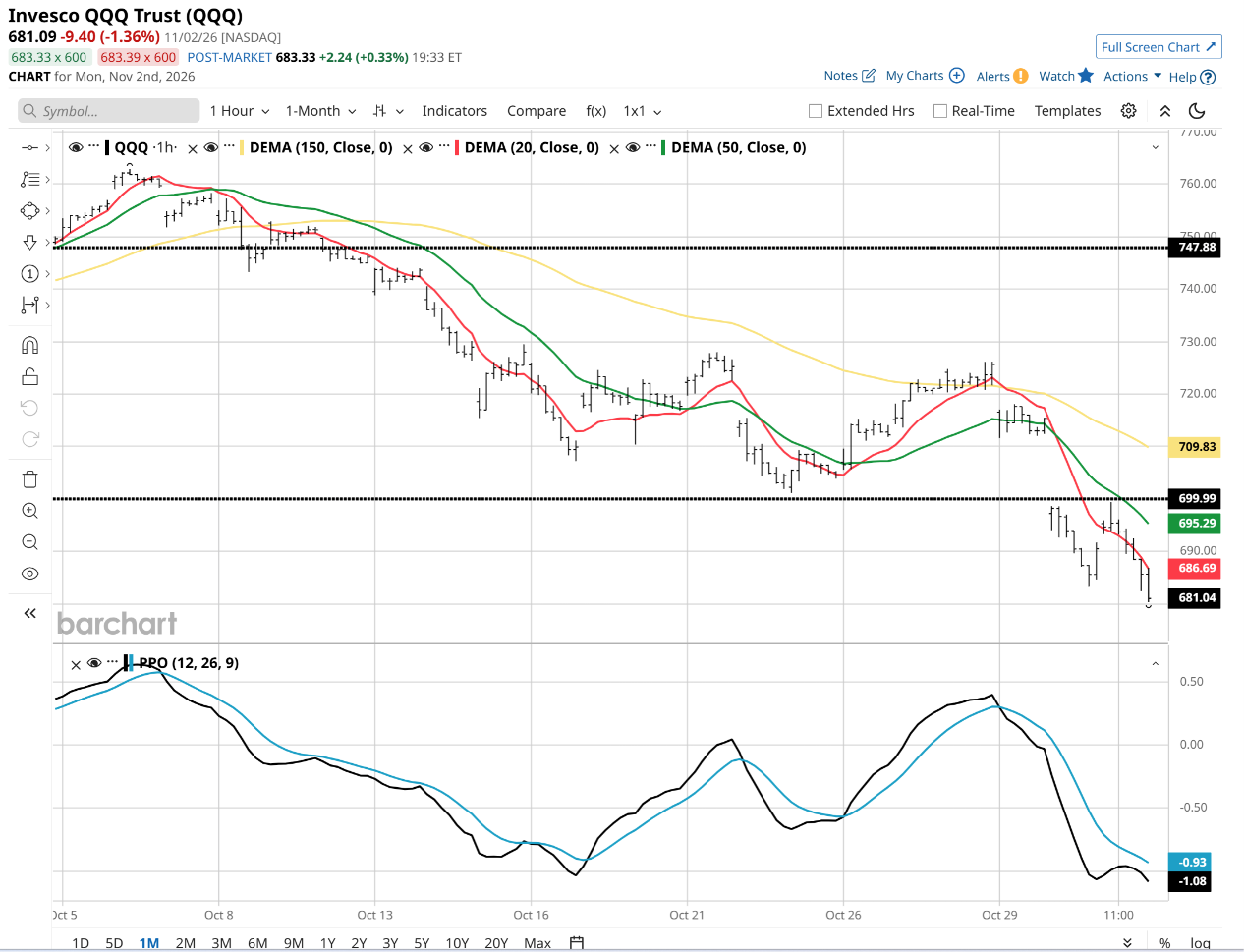
So, what do we do about it? Speaking for myself and our subscribers, exactly what we’ve been doing.
Using the approach to constructing portfolios I honed over 40 years of market tests, learning from my mistakes more than my successes.
Incorporating the ROAR Score, a defensive-minded technical indicator I developed over the decades, then automated in partnership with PiTrade, through our joint research effort, ROAR.PiTrade.com.
The focus here is on 2 things I see investors NOT doing, but should:
Think in a portfolio context, and less in terms of this or that ETF or stock.
Consider how much they can lose, not just how much they can make.
Funny thing about that: Much of the time, that defense-first approach produces some very competitive returns over time.
After all, when you turn $100 into $50 in a typical stock market bear cycle, you have to double your money just to get back to even.
But if you turn that $100 into $90, $95, or even more than $100 during a bear cycle, you are in great position for the eventual next bull cycle. Why isn’t this more intuitive to investors today? Same answer as why they don’t understand bonds very well. Because